


How Ordinary People Save Lives in Extraordinary Moments
Most people assume that if someone suddenly collapses, only a doctor, nurse, or paramedic can truly help. In reality, the person most likely to save that life is often the person standing nearby.
In sudden cardiac arrest, every minute matters. Immediate CPR can double or triple survival, and survival drops sharply with each minute that passes without CPR or defibrillation.
Yet many bystanders hesitate to help for one major reason: they still believe CPR requires mouth-to-mouth breathing.
That misconception alone may cost lives.
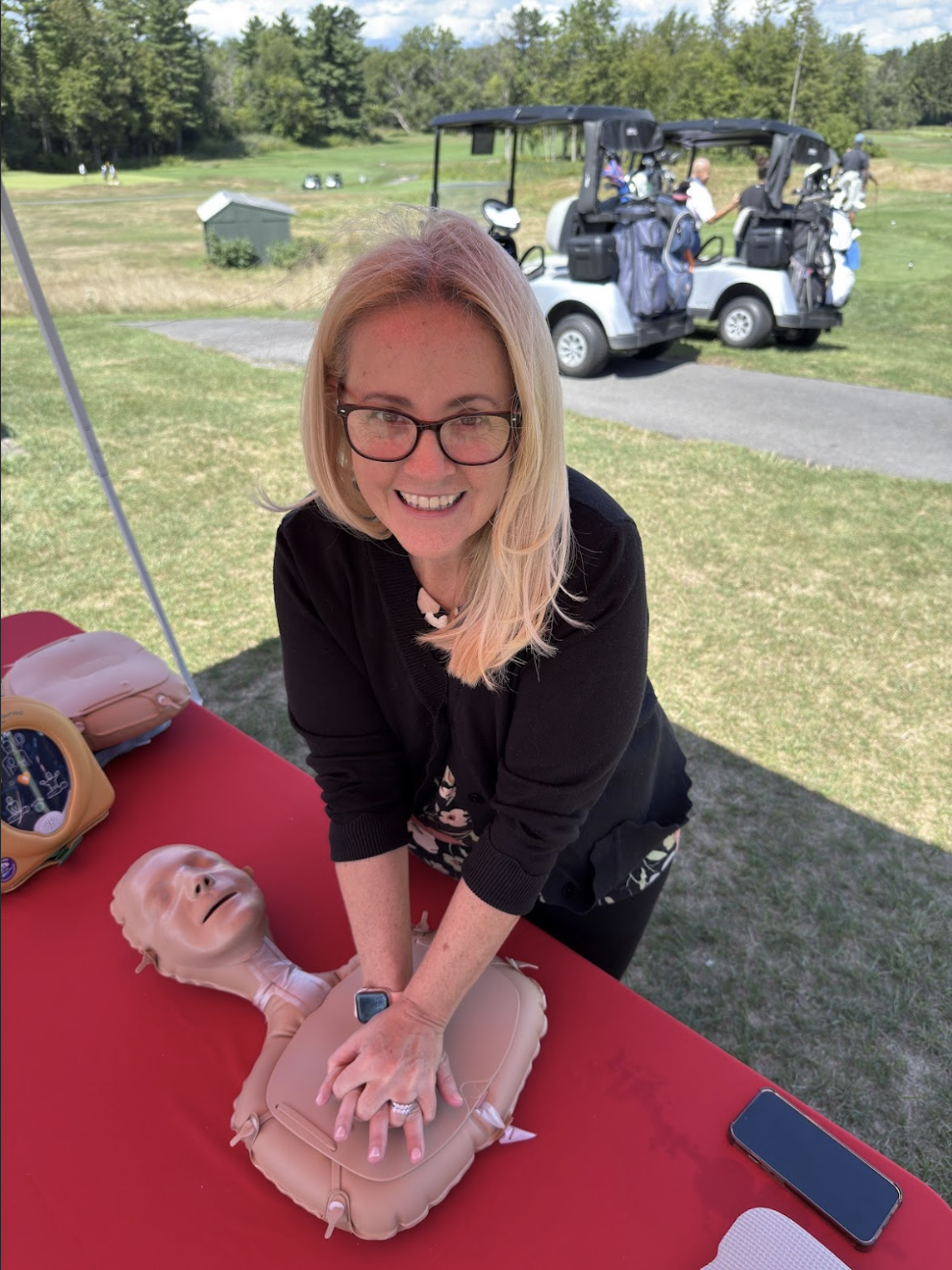
What many people do not realize is that for adults and teens who suddenly collapse, the American Heart Association recommends Hands-Only CPR for bystanders. That means you do not need to perform mouth-to-mouth resuscitation. You simply need to call 911 and push hard and fast in the center of the chest.
That’s it.
People are often afraid they will “do it wrong,” panic in the moment, or feel uncomfortable giving rescue breaths to a stranger. But imperfect CPR is far better than doing nothing. Immediate chest compressions alone can keep oxygenated blood flowing to the brain and heart until emergency responders arrive.
Another important point: cardiac arrest is not the same as a heart attack. A heart attack is a circulation problem caused by blocked blood flow to part of the heart. Cardiac arrest is an electrical problem in which the heart suddenly stops pumping effectively. A heart attack can sometimes trigger cardiac arrest, but the two are not interchangeable. When the heart stops, CPR and an AED are what matter most.
Another reality many people do not realize is where cardiac arrest usually happens. According to the American Heart Association, nearly three-quarters of out-of-hospital cardiac arrests occur in homes. That means the person you are most likely to save may not be a stranger. It may be a spouse, parent, sibling, child, friend, teammate, or coworker.
For adults and teens who suddenly collapse and become unresponsive, the AHA teaches two critical steps for bystanders:
Call 911
Push hard and fast in the center of the chest
If an AED is available, it should be used as quickly as possible. AEDs are specifically designed for the public. They provide simple voice prompts, analyze the heart rhythm, and only deliver a shock if one is needed.
An AED, or automated external defibrillator, can restore a survivable heart rhythm during sudden cardiac arrest by delivering a controlled electrical shock. CPR helps circulate blood to the brain and heart, while defibrillation can restart the heart’s rhythm. The best outcomes happen when CPR is started immediately and an AED is used quickly.
New York State has also increased its focus on cardiac emergency preparedness. Good Samaritan protections generally support people who voluntarily and in good faith provide emergency aid, including use of an AED. Schools and many public venues are also required to maintain AED access and emergency response planning.
The takeaway is simple: know where the AED is before an emergency happens. Whether you are at a school event, sports venue, gym, workplace, or community gathering, those first few minutes matter most.
You do not have to be perfect to help save a life. You simply have to act.
SAVE A LIFE: WHAT TO REMEMBER
Cardiac arrest is not the same as a heart attack
Most cardiac arrests happen at home
Hands-Only CPR does NOT require mouth-to-mouth breathing
Call 911 immediately
Push hard and fast in the center of the chest
Use an AED as soon as possible
AEDs provide simple voice instructions
Immediate CPR can double or triple survival
Every minute without CPR or defibrillation lowers survival
Even imperfect CPR is far better than doing nothing
