

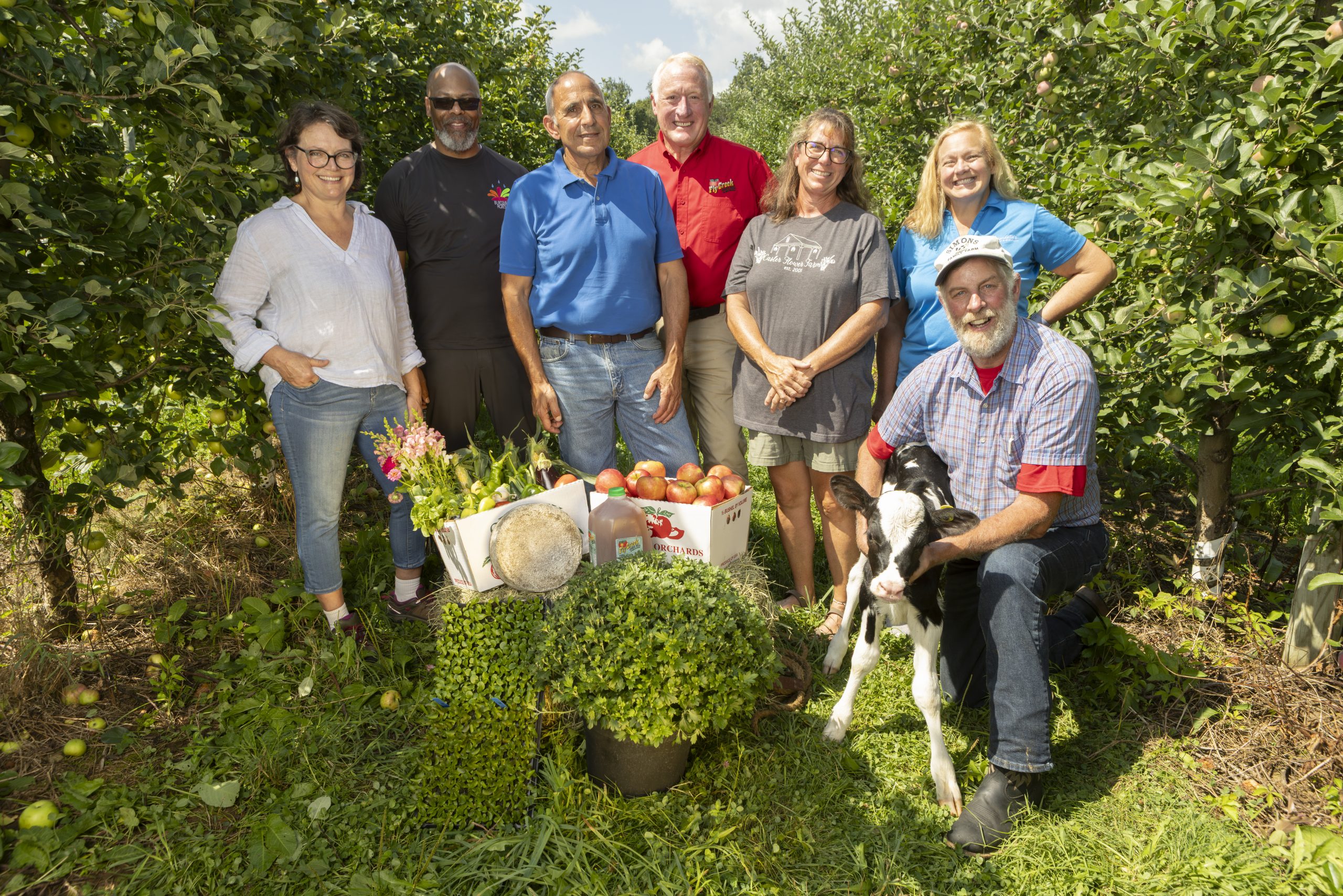
I’ve known for months that I wanted to tell the story of our family farms in this issue of Mohawk Valley Living. What I wasn’t sure of was exactly how I wanted to tell it.
Last year, we focused on one farming family and their story. This year, I wanted to pull the lens back and look at farming across our region, from dairy and produce farms to flower farms and orchards, and even hydroponic farming right in the heart of Utica’s Corn Hill neighborhood.
I wanted to know how these families came to farming and what the land, the work and the farm itself mean to them. I wanted to understand what has changed from one generation to the next, what has tested them, what they’re most proud of and, perhaps most importantly, what keeps them going. What I didn’t expect to discover was just how connected they all are. There is a shared purpose among these farmers that goes far beyond what they grow, raise or produce. They are feeding our families, supporting one another and continuing a way of life that has shaped the Mohawk Valley for generations.
When you walk into a place like North Star Orchards, where we photographed this month’s cover, you’re greeted by a beautiful farm market overflowing with colorful fruits and vegetables, fresh-baked goods and locally made products. It’s easy to admire it all and start filling your basket.
What you don’t immediately see is everything it took to get there. The work begins long before anything reaches the farm stand. There are fields to prepare, seeds to plant, animals to care for and crops to tend. There are early mornings and long days, equipment to maintain and problems to solve. There are seasons that cooperate and seasons that don’t. One unexpected frost, too much rain or not enough can change months of work almost overnight.
And yet, they keep going. For some, that means carrying on what their parents and grandparents built. For others, farming is a path they found for themselves. Their operations have changed with new technology, new crops, new markets and new ways of reaching customers, but so much of what matters remains the same: hard work, resilience, family and a responsibility to leave something worth carrying forward.
I was also struck by how often their stories intersect. One farm market may carry vegetables grown by another nearby farmer. A dairy operation may work with another farm to grow its herd. Locally made products travel from one farm stand to another. Farmers share knowledge, resources and, when needed, a helping hand. Each has its own specialty and story, but together they form a network that keeps more of what we eat grown, raised and produced right here in our region.
That may be what stayed with me most while working on this issue. At a time when we hear so much about where our food comes from and how it is produced, there is something reassuring about meeting the people who are actually growing it. You can stand in their fields, walk through their barns, see their greenhouses and orchards, and begin to understand the care, uncertainty and commitment behind what eventually ends up on our tables.
I also wanted to know what these farmers wish the rest of us understood about farming today and what they hope comes next. Their answers are different, just as their farms are different. But beneath them is something shared: pride in what they do, respect for those who came before them and hope that another generation will be willing to carry it forward.
After spending time with these farmers, I have an even greater appreciation for what they do every day, not only for their own families and businesses, but for all of ours.
This month, we’re taking you beyond the farm stand and into the fields, barns, orchards and greenhouses of the Mohawk Valley to meet some of the people helping feed our region and hear the stories behind the food we so often take for granted.
I think you’ll look at that next basket of apples, gallon of milk or just-picked tomato a little differently.
NORTH STAR ORCHARDS
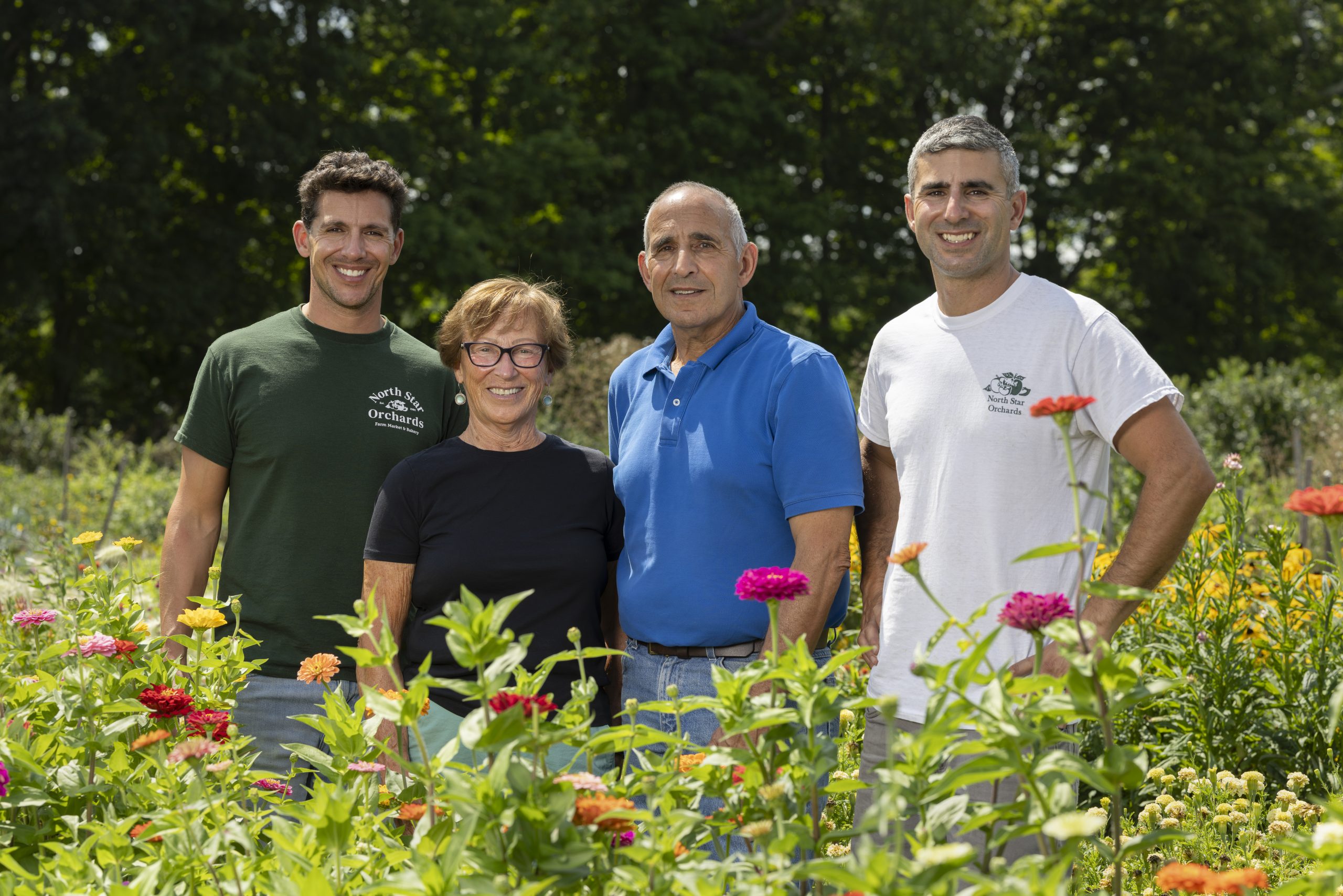
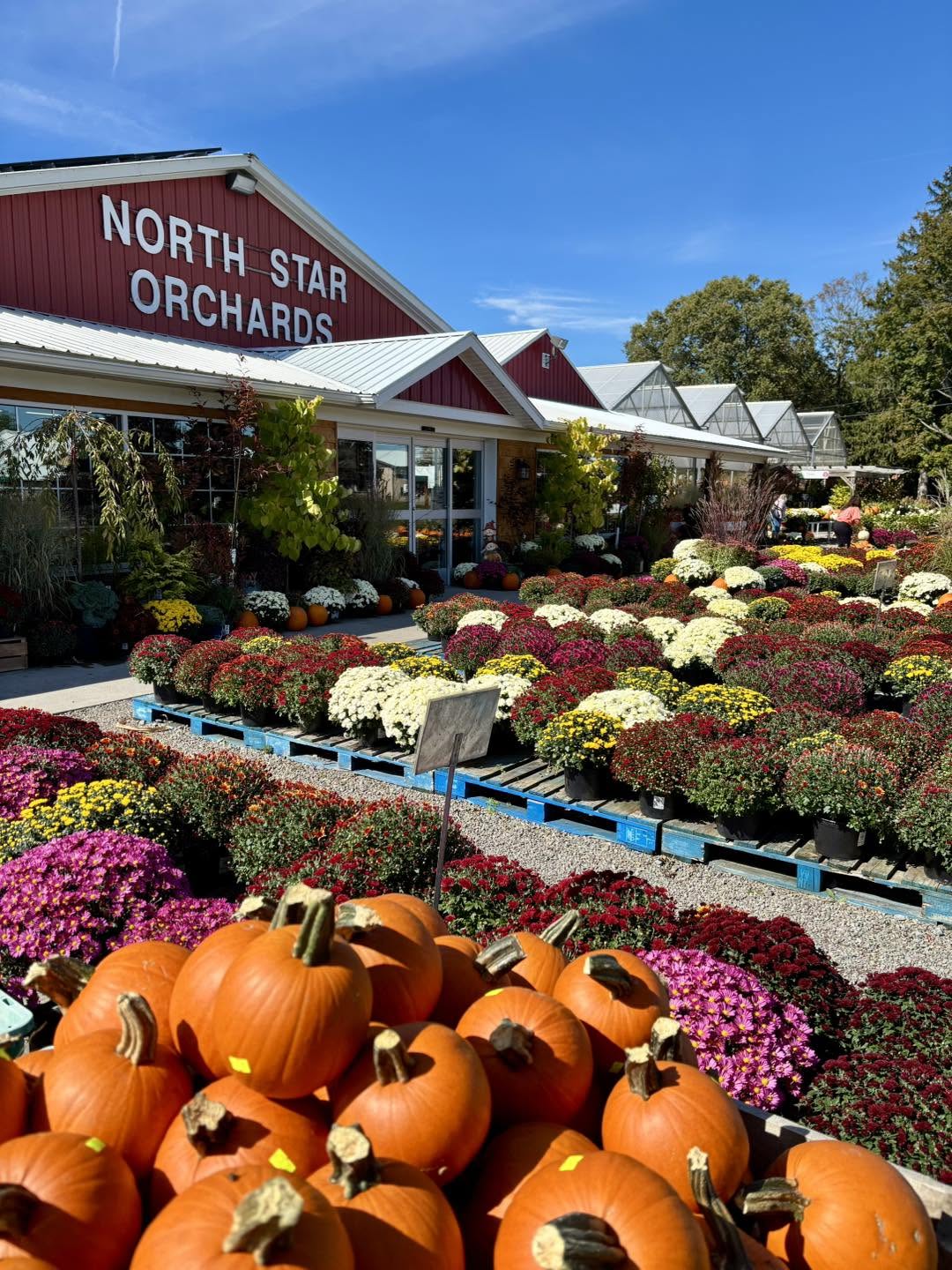
North Star Orchards began with five vacant acres and an idea. George Joseph was attending SUNY Oswego when he worked at an orchard and discovered he liked the work. Back home in Clinton, his parents had five vacant acres across the road. “I really liked the work, and my parents had five vacant acres across the road, so I said, ‘Well, let’s put an orchard down.’ I planted my first orchard when I was in college.”
After graduating, George went to Alaska, but kept coming home to care for his orchard. “I made a lot of mistakes and learned a lot of things.” Eventually, a farm became available, and George had saved enough to buy it. “We bought the farm and started it with a game plan. We had a plan. That’s how it started.”
North Star began as a wagon on the corner. For about eight years, George developed the farm while living elsewhere and returning seasonally. “We built a business, and I think the benefit was that it gave the community ownership in what we were doing. Every year, people would ask, ‘What are you doing next?’ That became part of it.”
George never wanted North Star to be just another fruit stand. It became a farm market, embraced agritourism and grew into a multi-season operation. “We went from asparagus right through to Christmas trees. We became a multi-season farm and did things differently from others.” Today, it is easy to see the bustling market, bakery and seasonal offerings and forget where it began. “We started with a rundown old farm.”
Building it meant figuring things out along the way. Weather, deer, freezes and drought remain constant challenges, but George sees solving those problems as part of what keeps farming interesting. “There are constant challenges when you’re growing crops, whether it’s weather, deer, freezes or drought. But I think that’s also what makes it intellectually interesting. You’re always figuring things out and finding ways to overcome those challenges.” There is also the uncertainty that comes with building a business. “As an entrepreneur, the biggest challenge is the uncertainty of success. It’s humbling. You have to grow with your successes.”
That makes what North Star has become especially meaningful. Unlike many farms, it was not something George inherited. “When I look at what we’ve built, I would say I’m most proud of starting from nothing. It’s not a generational farm. We started with an idea.” Over time, that idea became something he believes can continue beyond his own family. “We took what may have been an unworkable farm and turned it into a business model that can be replicated long after we’re gone. Whether it’s my family or another family, we’ve built a model that works.”
George has taken that thinking beyond North Star. Through his role as a County legislator, he helped start the Upstate Growers and Packers Co-op, bringing producers together from Schoharie to Buffalo. “The question is, how does a small little farm like ours sell to Blue Apron, a national company? Because of those connections, we could create opportunities that a small farm couldn’t create alone.”
North Star also gives families a way to experience agriculture as fewer children grow up around farms. “Over the generations, kids have lost some of that connection to what farms are really about. It used to be that you lived near a farmer, were related to a farmer, or you were a farmer. That doesn’t happen as much anymore.”
For George, what North Star has become comes back to a simple philosophy. “I think the key to it is passion, perseverance, and nobody telling us we couldn’t do it.” And after starting a farm that was never generational, he would like to see it become one. “The next generation. Fortunately, I do have kids in it, and hopefully they’ll continue. I would especially like to see a third generation because that would show how sustainable what we built really is.”
What began with five vacant acres, a rundown farm and a plan has become a business George believes can last. Seeing another generation carry it forward may be the best measure of what he built.
VISIT NORTH STAR ORCHARDS
Address: 4741 NY-233, Westmoreland, NY 13490
Hours: Daily: 8am–6pm; seasonal operation runs mid-April through December 24.
Farm Market Favorites: Farm-fresh seasonal produce, apple cider, aged cheeses and New York State products, plus scratch-made pies, half-moon cookies, muffins, breads and other treats from the in-house bakery.
While You’re There: Depending on the season, pick your own blueberries, apples or pumpkins, cut your own tulips, explore the greenhouse or return during the holidays for Christmas trees and seasonal favorites.
BLACQUE ACRES
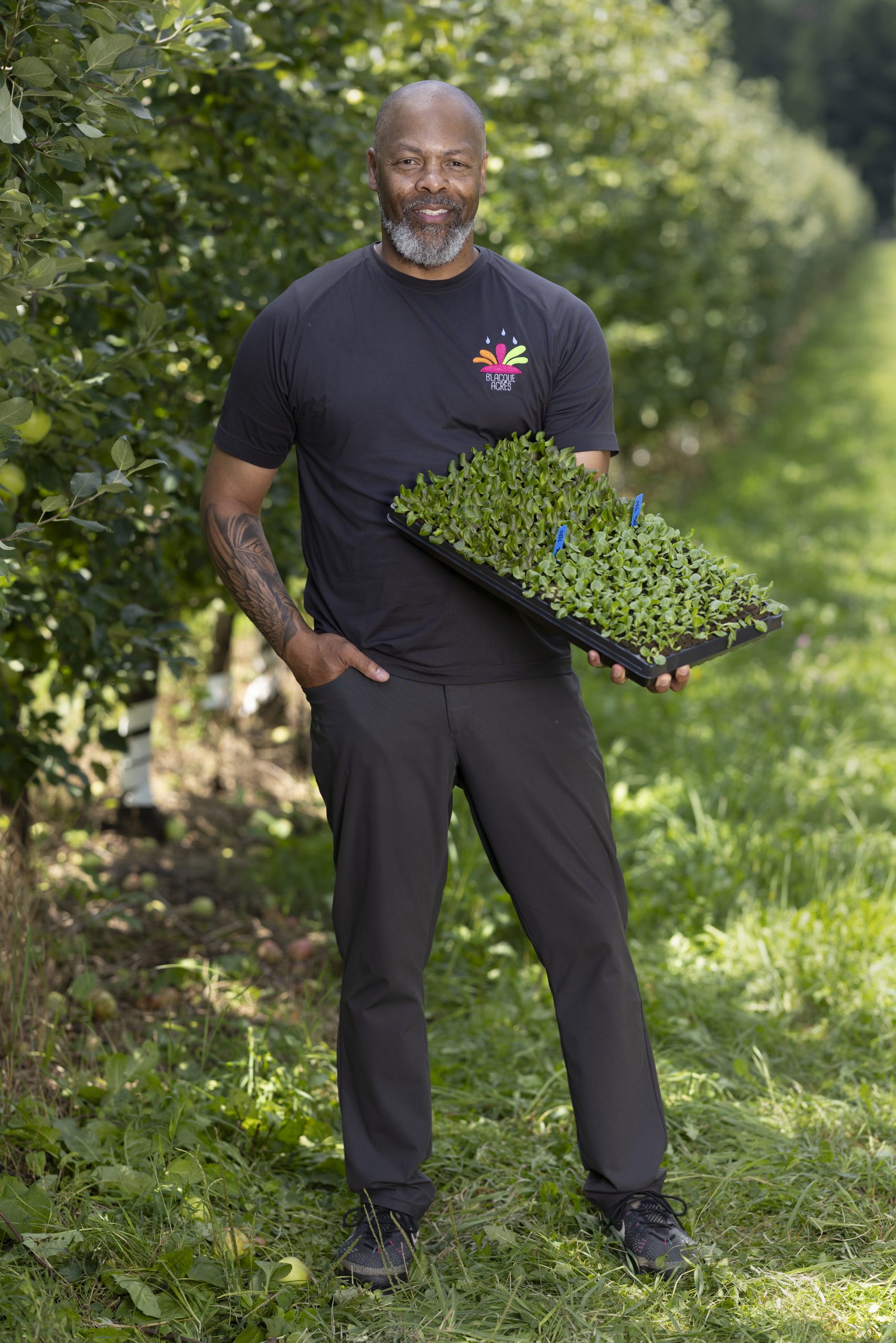
Blacque Acres began with James Paul’s belief that fresh produce should be available year-round in the community he has spent much of his life serving.
“This farm started as a thought that I could provide fresh produce to an underserved community, all year long. My love for the community and the youth and families that I’ve worked with over the past 25 years is what’s brought me to this work.”
Blacque Acres is a nonprofit hydroponic farm in Utica’s Corn Hill neighborhood, providing fresh produce year-round while supporting youth and families through education and outreach. Unlike the fields and barns often associated with farming, James grows food right in the neighborhood he serves. “My farm is in the community that I serve. It’s hyperlocal and allows me to provide our produce with very little transportation or storage. Being active and visible in the community makes my community so much smaller. Our connection is organic.”
The farm partners with Mosaic Health to provide food boxes through a prescription program. James also creates opportunities for young people through cooking classes, day trips and STEAM classes, using the farm as another way to reach youth and help address violence in the community.
What people may not realize is that Blacque Acres operates around James’s full-time career. “My typical workday starts with me going to my full-time job that pays the bills. I then go to the farm after work and the daily tasks there vary.” Those tasks include planting seeds, transplanting seed plugs into grow towers, harvesting, delivering produce and maintaining the farm. His family helps, but they have jobs of their own, too.
“People don’t always see or understand that all the work put into the farm is done after the work day. I get help from my family, but they all work as well, so the farm is run on a part-time basis, in terms of hours. It’s designed that way.”
Learning what grows best in a hydroponic environment has been one of James’s biggest challenges. “My greatest challenge has been figuring out what grows best in the farm and what I can do to get the best outcomes. I’ve started to work with consultants that have a much better understanding of hydroponic agriculture than I do.” But the response from the people around him has been one of the most rewarding parts of building Blacque Acres. “I am most proud of the willingness of my community to want to jump in and help. There are always people asking how they can volunteer or have we thought about partnering with this certain group, to help get the food out.”
For James, the farm is another way to give back to the place that has given so much to him. “Doing this work in the Mohawk Valley means that I’m giving back to a community that’s given me so many opportunities. Raising my family here has been a blessing and I hope that I can be a blessing to others.”
Growing food where it is distributed also shapes how he thinks about the larger food system. “I wish that people could truly understand that buying local produce reduces travel time and the need for preservatives when it comes to distribution. The people that bring your food to you are members of the community and seek to be good neighbors and stewards of the community that they serve.”
James hopes Blacque Acres can become self-sufficient, expand its footprint and eventually hire help. He is also thinking about what the work can teach the next generation. “I hope to pass on to the next generation a work ethic that helps them understand that this work is task based and not time based. Every day isn’t the same and there are times when you must work longer than you thought you would, but the job has to get done and you work through it.”
It is a lesson James lives himself. “I started this farm with just a vision. My passion and dedication to the community allowed me to receive funding to start the farm with no capital of my own. That shows that there are great partners in this community that believe in helping their neighbors and this is just one of the ways that we do that.”
In the middle of Corn Hill, James is growing more than food. He is building connections, creating opportunities for young people and finding another way to serve the place that led him to farming.
BLACQUE ACRES | CORNHILL HYDROPONICS
Location: James Street, Cornhill, Utica, NY
Growing Year-Round: Fresh greens, herbs and vegetables are grown 365 days a year using hydroponics inside a 40-foot shipping container.
About: Founded by James Paul, this nonprofit urban farm works to provide fresh, affordable produce to the community while bringing innovative, sustainable agriculture to Utica’s Cornhill neighborhood.
Support Local: Look for Blacque Acres during September’s Mohawk Valley Gives campaign.
CANDELLA’S FARM & GREENHOUSES
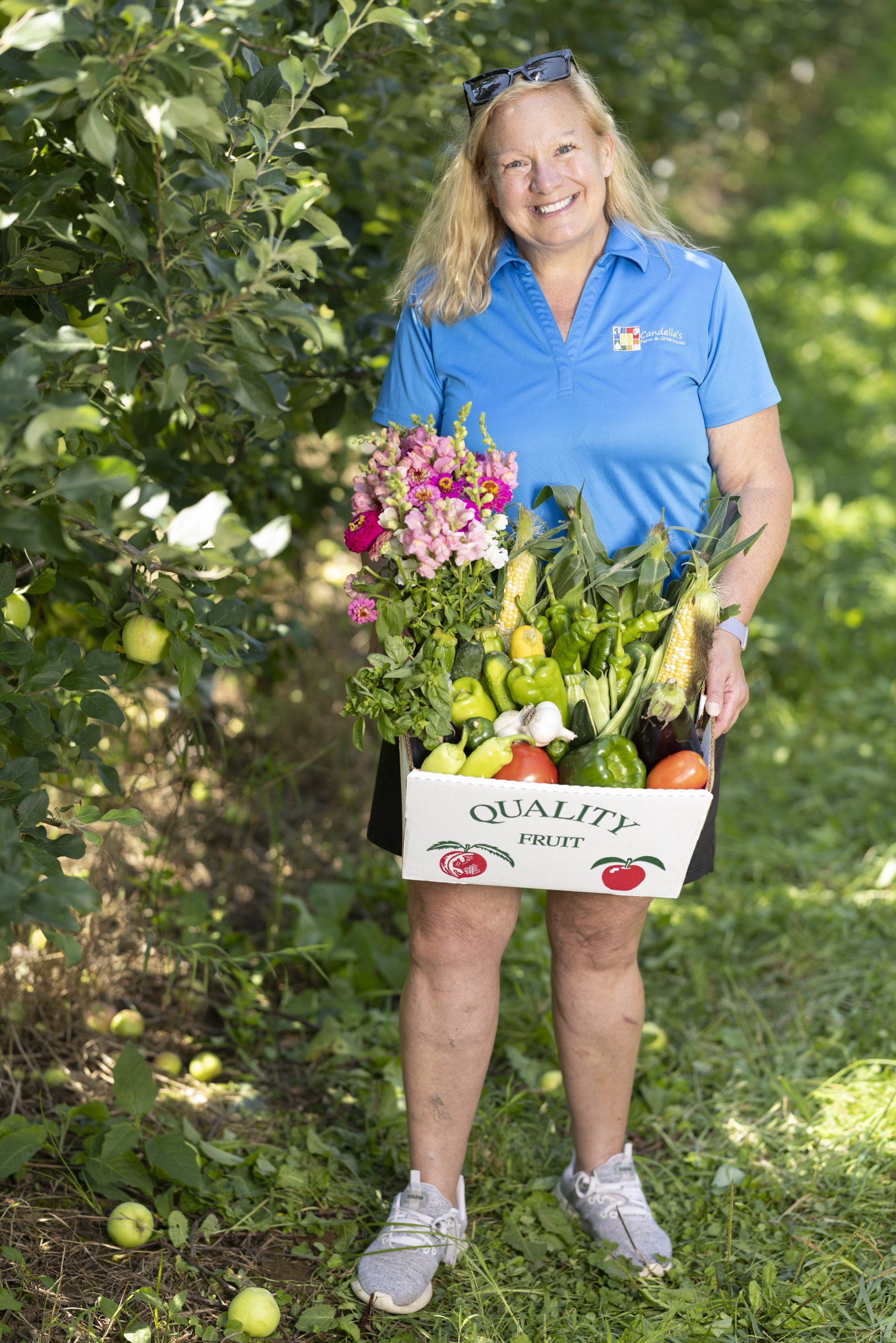
Candella’s Farm & Greenhouses has been part of Shawna Papale’s life since she was a child. The farm was started by her grandparents, Rose and Frank Candella, both immigrants who Shawna remembers as “two of the hardest-working people you could ever meet.” Her parents became the second generation, and today Shawna and her brother, Michael, are carrying the family farm forward.
“I learned work ethic as a child working alongside my grandparents, and that shaped who I am. One of my biggest regrets is that my own daughters never got to know them.”
More than 120 years later, Candella’s remains a family farm, but it has continued to change with each generation. Its U-Pick operation has grown from strawberries to include blueberries and raspberries. During COVID, the family started its Harvest Box program, their version of a Community Supported Agriculture. Shawna’s daughters and other young people working on the farm took the lead, handling planning, operations and customer relationships.
“Working together is what made the program succeed, and they all learned life skills along the way, from those first boxes during COVID to the many customers who still get their box weekly today.”
For visitors, Candella’s may mean picking berries, walking through the greenhouse or filling a basket with fresh produce. Behind that experience is another side of farm life. Field work is critical, but much of Shawna’s day is spent on reporting, compliance, finances, hiring, marketing and customer expectations. After years working in economic development, she has brought those skills back to the farm.
There isn’t much of an off-season. Candella’s sells trees, wreaths, centerpieces and kissing balls through December. Winter brings paperwork and repairs, and the greenhouses reopen in March. Then there is the work behind the food itself. “I am still amazed by how many times we touch a single product.”
A tomato plant starts from seed in April. Before a tomato reaches a customer, there is seeding, greenhouse care, hardening off, planting, fertilizing, irrigating, weeding, staking and constant monitoring for pests and blight. Months of work can be affected by one bad weather event, while fuel, fertilizer and seed costs continue to rise. “I still hear, ‘I remember when corn was a dollar a dozen.’ Prices have to reflect what it actually costs to grow food today.”
Weather and workforce have been two of the farm’s biggest challenges. Shawna is also concerned about agricultural land being converted for other uses, including solar development. “We need that energy development, but not at agriculture’s expense.”
What she is most proud of is continuing what her grandparents began. She sees that legacy in customers who first came with their parents and grandparents and now return with children and grandchildren of their own. She also sees it in Candella’s relationship with Hope House in Utica, where excess produce helps feed people who need it.
For Shawna, farming is part of building a stronger region. “I never hesitate to look for ways to help build a better Mohawk Valley, and running this farm is very much part of that.” It is personal, too. “It means standing up for myself, so my daughters and the other young women I have watched grow into future leaders of this community know they can do the same, and never have to be afraid to say and do what is right.”
She also wishes more people understood how much work happens before food reaches their kitchen. “I have a saying: every young person should have to work on a farm for a week — hauling hay, harvesting, sorting, picking.”
That work ethic has carried into her own family. Her daughter Gabby graduated from law school, Sara graduated from Cornell, and her nephew Mikey earned a degree in respiratory therapy. Their paths may take them beyond the farm, but all three still help when needed. “Those paths were strengthened by the work ethic they gained at Candella’s Farm, and I know my grandparents and parents would be so proud of them.”
Shawna would love to see Mikey take over the farm one day, but believes the decision must be his. “Coming from a farm background is something to be proud of no matter what path a person takes — we need CEOs and executives, but a farmer is just as important, and part of the fabric of our community.”
More than 120 years after Rose and Frank Candella began the farm, another generation is carrying it forward, shaped by the same work ethic Shawna learned beside her grandparents.
VISIT CANDELLA’S FARM & GREENHOUSES
Address: 9256 River Road, Marcy, NY 13403
Phone: (315) 736-8782
Hours: Mon–Fri: 9am–6pm | Sat–Sun: 9am–5pm
Seasonal Favorites: Farm-fresh corn, cauliflower, cousa squash and cucumbers, plus tomatoes and hot or sweet peppers for canning and freezing. Shop fall mums, pumpkins and corn stalks as the season shifts into autumn.
BEN SIMONS
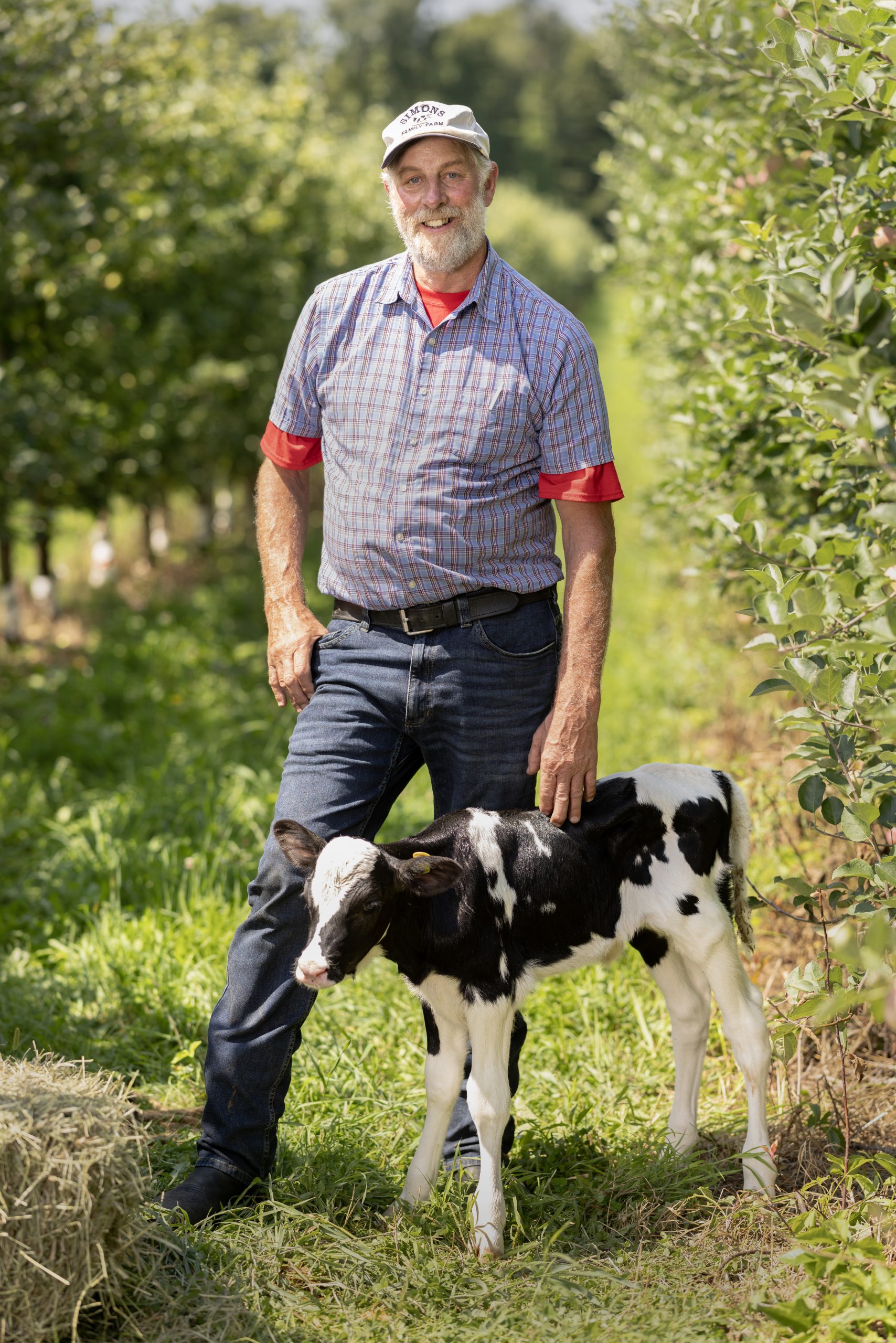
Farming is the life Ben Simons has always known. He grew up on a small family farm in the Lakes Region of New Hampshire, milking cows, making hay and harvesting wood for firewood. When he and his wife, Robin, came to New York in 1984, they worked on several rented farms before settling on Starr Hill Road. “When I first moved out here from New Hampshire, all I knew is I wanted to milk cows. The very thing I knew and loved.”
Over the next 40 years, Ben and Robin built an operation that today includes six farms totaling 1,100 acres, along with another 600 acres they rent in Steuben, Remsen, Lee Center and Boonville. In 2024, Ben retired from dairy farming after four decades, but the work did not stop. The farm has expanded its beef, pork, hay, corn, soybean and firewood operations, with Ben’s son, Christopher, helping shape what comes next. “However, in recent years, I’ve let my son, Christopher take the helm and make our farm more diversified. He’s really passionate about this and it makes me grateful everyday.”
A typical day still starts around 6 a.m. Christopher and Ben’s grandson, Anderson, arrive shortly after 7, and the three usually begin with a family meeting about the day ahead. They might make hay, work on firewood or repair equipment in the shop, but farming has a way of changing even the best-laid plans. “However, it’s not too hard to get off kilter and have to re-adapt to the day’s plans because it’s constantly changing from what we had planned.” By evening, the family comes together for supper and to catch up on the day. Ben says retirement from dairy has hardly slowed him down. “Now that I’ve retired from the dairy farming, I found that I am just as busy if not more than before with all of my advocacy; through radio stations, social media, and the various newspaper articles, and also helping my son keep the farm running smoothly.”
Behind those days are challenges people do not always see. Ben points to rising costs for fuel, seed, fertilizer, labor, electricity, twine and equipment repairs. Finding reliable labor has become one of his biggest concerns, leading the family to mechanize parts of its hay, firewood and other operations. He is also concerned about finding good, viable farmland without competing with neighboring farmers, particularly as land is considered for green energy projects.
Even with those challenges, Ben’s outlook keeps coming back to family. He is proud of what he has built and confident in Christopher’s ability to carry it forward. Anderson has already taken an interest in farming, and Ben’s daughter-in-law, Megan Goldstein, is part of the family effort too. “My wife and I are so blessed to have a daughter-in-law, Megan Goldstein, who not only helps me with my articles and understands Agriculture, but puts up with us.”
Much of what the farm produces stays in the area, from firewood that heats homes to meat in family freezers and hay sold throughout the region. Ben has also seen more people wanting to know where their food comes from. “I do believe that in recent years there’s been more of a push for the everyday person that wants to know where their food products come from, and I surely don’t blame them one bit!”
That connection is part of why Ben advocates for agriculture. He wishes more people understood just how dependent farming remains on the weather. “I do wish more people understood that we are at the mercy of Mother Nature on a daily basis.” Good weather often means longer days and making the most of conditions while they last. When the weather changes, the work simply changes with it.
After growing up in New Hampshire, Ben has found something familiar in the Mohawk Valley. “The work that I do in the Mohawk Valley means to me the overwhelming feeling of the people are just like those in New Hampshire.” He values the relationships he has built here, along with the open farmland and views along Starr Hill Road. “And every morning that I look out my windows to see the views, I know I am a blessed man.”
Some of Ben’s most meaningful memories connect the generations, including his father-in-law coming from New Hampshire to work on the farm with Christopher. “A memory that sticks with me is when my father-in-law came out from New Hampshire to farm with my son, when he could, meant more to me then anything else.”
When Ben came to New York, he wanted to milk cows. Forty years later, Christopher is helping carry the farm forward, with Anderson growing up alongside them. “Me and my wife’s families have farmed for many generations, and I have no doubt that my family will for many more to come.”
FLY CREEK CIDER MILL
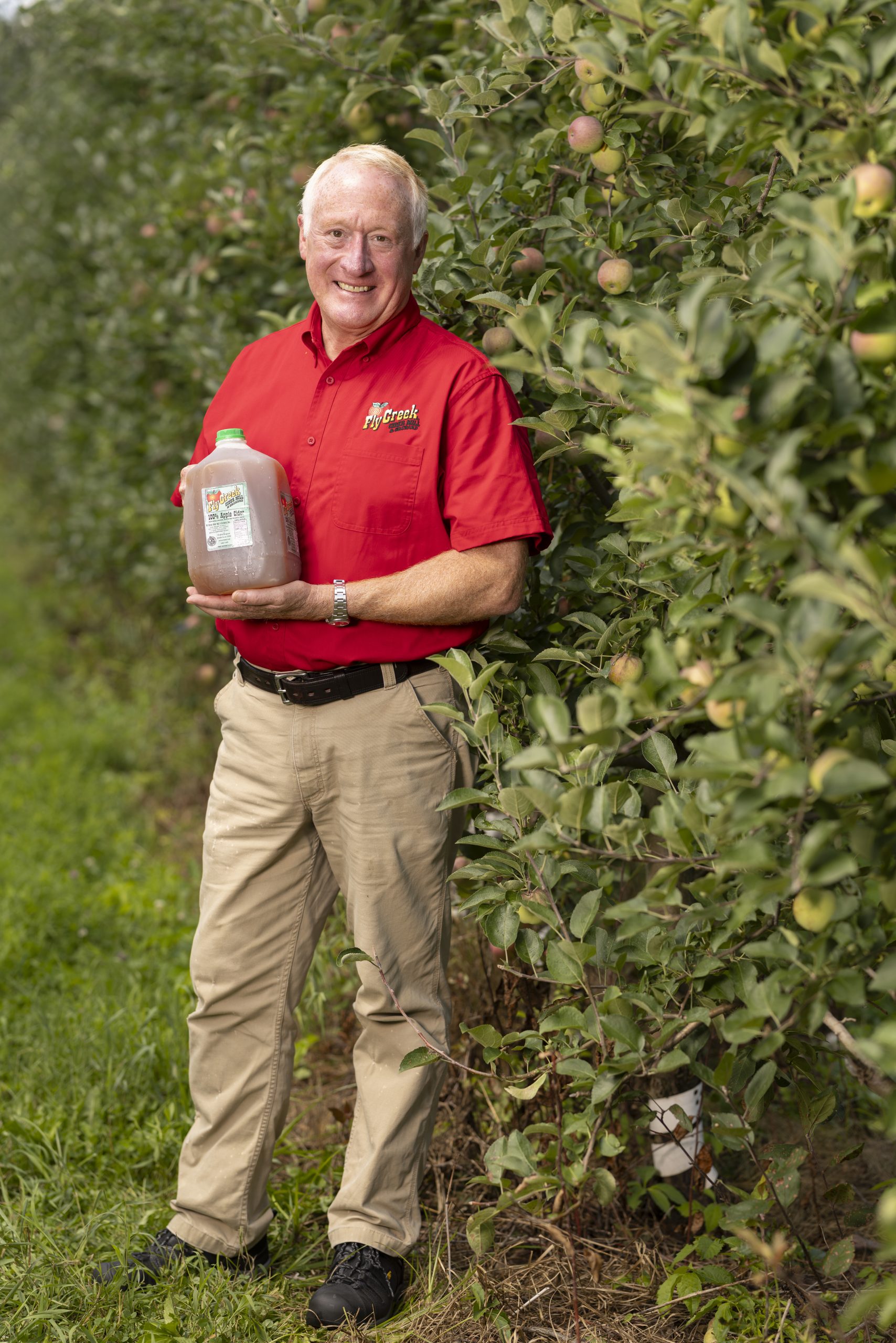
Fly Creek Cider Mill has been part of the landscape outside Cooperstown since 1856. For Bill Michaels, carrying that history forward is both a family legacy and a responsibility. Bill’s parents purchased the property in the early 1960s. He began his career in hospitality before returning to Fly Creek in 1999 to purchase the Mill from them. “It gave me the opportunity to bring my hospitality background home and continue something that had already become an important part of our family and the community.”
Since then, the Mill has evolved from primarily a fall operation into an eight-month destination, opening around Mother’s Day and continuing until just before Christmas. A major renovation in 2016 modernized the building and brought cider production directly into the retail experience. The product line, foodservice offerings and farm winery portfolio have also grown, while preserving the historic character generations of visitors remember.
Bill remains a hands-on owner, overseeing cider production, marketing and financial operations while working closely with the management team. “There is a tremendous amount of behind-the-scenes work required to have the Mill ready for our visitors every day. Keeping things fresh, new and clean is a huge undertaking that I don’t think many people realize when they visit.”
Part of that work is balancing the Mill’s history with the realities of operating today. Cider is still produced using equipment dating back to the late 1800s, but everything must meet modern standards for quality and food safety. “Historic authenticity is something we pride ourselves on. We want people to experience cider being made in much the same way it has been for generations while meeting all of today’s standards for quality and food safety.”
Finding a dependable seasonal workforce has been another challenge in a small community with a shrinking labor force. The Mill has adapted by supplementing its American workforce with seasonal employees through the H-2B visa program, working alongside year-round and local seasonal staff.
For Bill, the work is rewarded by the people who walk through the doors. “I am most proud of seeing our customers’ expressions and the positive experiences they have when visiting the Mill. Many visitors have never seen cider being made before, and they are impressed that we can produce a superior product in much the same manner it has been done for generations. Being able to preserve that history while continuing to grow and improve the business is very rewarding.”
Those visitors have also become part of the Mill’s connection to the region. “Our regional visitors are some of our best ambassadors. They are the people who champion what we do, bring their friends and families to visit, and spread the word about the Mill. We are fortunate to be part of a larger tourism community centered around Cooperstown and the Mohawk Valley, and the success of all of us is interconnected.”
Bill wishes more people understood that same connection when it comes to the food they buy. “I wish more people understood how much work, risk and commitment are behind the food and products they enjoy. Whether it is an apple grower, a cider maker, a small food producer or a family-owned business, there are real people behind those products who care deeply about their quality. Buying locally and visiting places where food is actually produced gives people a much greater appreciation for that connection.”
With a history that began long before the Michaels family arrived, Bill thinks of the future in terms of stewardship. His children have careers and interests of their own, and he doesn’t know who will eventually carry the Mill forward. “More importantly, I hope that whoever eventually becomes the next steward of the Mill has the passion, patience and resilience to continue growing the operation while respecting what makes it special. The Mill has been operating since 1856, long before my family became involved, and my hope is that it remains a thriving business and destination for generations to come.”
Nearly 170 years after the Mill was built, much has changed. What Bill hopes to preserve is the experience generations of families have made part of their own traditions.
VISIT FLY CREEK CIDER MILL & ORCHARD
Address: 288 Goose Street, Fly Creek, NY 13337
Hours: Daily: 9am–6pm during the season; the Mill reopened May 8, 2026 for its 170th season and operates through the holiday season.
Mill Favorites: Fresh-pressed sweet cider, Mill-aged extra-sharp New York cheddar, Mill-made fudge and specialty foods, along with apple wines and hard ciders made from New York State apples.
While You’re There: Take a complimentary self-guided tour to see the historic cider-making process, explore the Mill Store Marketplace and Tasting Room, and spend some time along the Millpond Boardwalk.
JONES FAMILY FARM
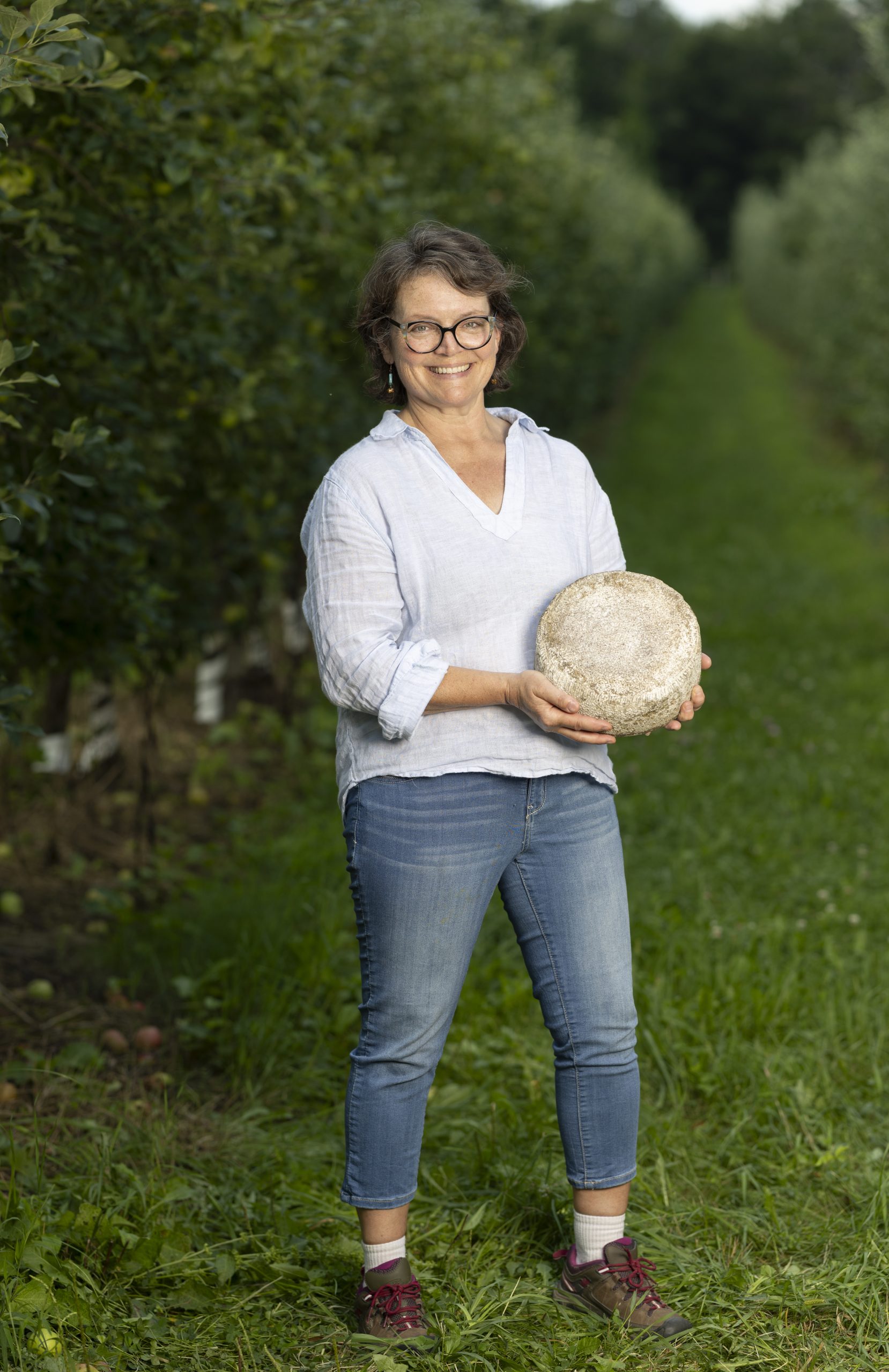
More than 20 years ago, Suzie Jones and her husband, Peter, were living just outside Boston, doing, as Suzie puts it, “very un-farm-y things,” when they decided to make a big change. Both originally from Wisconsin, Peter grew up working on neighbors’ farms, while Suzie grew up visiting her uncle’s butcher shop. They moved to the Mohawk Valley and began raising the things they enjoyed. “As it turns out, lots of other people enjoyed what we were raising, too!”
That beginning grew into Jones Family Farm, although getting from there to here has involved plenty of change. “I feel like we’ve gone through about a million changes.” Suzie and Peter first raised chickens, then goats. Encouragement from neighbors, customers and restaurateurs led them to try goat cheese and cream cheese and eventually expand into chicken sausage and gelato.
Along the way, they built partnerships with the Bagel Grove, Tailor & the Cook and Nola’s. New York State distributors and programs such as New York Food for New York Families have helped get their products into food hubs, universities, restaurants and retailers across the state.
On the farm, every day begins with feeding and watering the animals. What comes next can change by the hour. Some days are dedicated to cheesemaking, others to processing chickens in their 5A slaughterhouse or making deliveries. “Folks may be surprised at the number of hats we have to wear as farmers—and how quickly we sometimes have to change those hats. One minute I may be creating invoices in QuickBooks and the next will have me in the barn helping a pregnant ewe give birth.”
What people may not see is the investment behind making a farm like theirs work. “I’m quite certain that most people don’t understand or even see the scale of investment that goes into making cheese or farming in general.” Equipment, buildings and infrastructure require significant investment, and for Suzie and Peter, one of their greatest challenges has been managing growth. “The old adage is true: they don’t call them growing ‘pains’ for nothing!”
Suzie’s previous career as a grant and proposal writer has helped them secure grants for upgrades. Even as the business has grown, they have kept it small enough to remain directly involved. “I am super proud that we’ve built a name and reputation for delicious, quality farm products. There are no shortcuts here, but rather dedicating oneself to showing up—day after day—and simply doing the work.”
They have also built it as a family. Their eldest daughter, Harper, is taking on more responsibility in the cheese plant and with the animals while experimenting with “fun & funky cheeses.” Now in their mid-50s, Suzie and Peter are thinking about retirement in another 10 years and how to set the next generation up for success.
For a family that came to the Mohawk Valley from somewhere else, the relationships they found here have become an important part of the story. “We were welcomed with open arms by our neighbors and helped at every turn. We’ve also found ‘our people’—customers, stores, and restaurants that love what we do. We’ve found a home here in the Mohawk Valley and we’re incredibly fortunate!”
Suzie sees those relationships as inseparable from farming. “How are we NOT connected to the people and communities around us?!? While we believe the quality of our products speak for themselves, it is the personal relationships that carry us forward.”
She also wishes people understood how their food choices ripple through the larger agricultural economy. Productive farmland supports feed and seed dealers, equipment sellers and repairmen, banks and veterinarians, helping maintain the network farms depend on. “If we could all dedicate a small portion of our weekly budget to supporting local, that money would stay in our communities.”
After more than two decades, Suzie and Peter have built more than a place to raise animals and make cheese. They have built a family business and found a home in the Mohawk Valley, supported by relationships that have carried them through all those “million changes.”
Perhaps Suzie says it most simply: “Supporting local NOW means having it around for when we need it most.”
VISIT THE JONES FAMILY FARM
Address: 753 Caldwell Rd, Herkimer, NY
Hours: Daily: 10am–6pm through September
Farm Store Favorites: Artisan goat, sheep and cow cheeses, including chèvre and feta, plus farm-fresh eggs, pastured poultry and small-batch gelato and sorbet.
While You’re There: Take in scenic Mohawk Valley views and peek through the viewing window into the farm’s processing areas.
