

By Libby Lemire
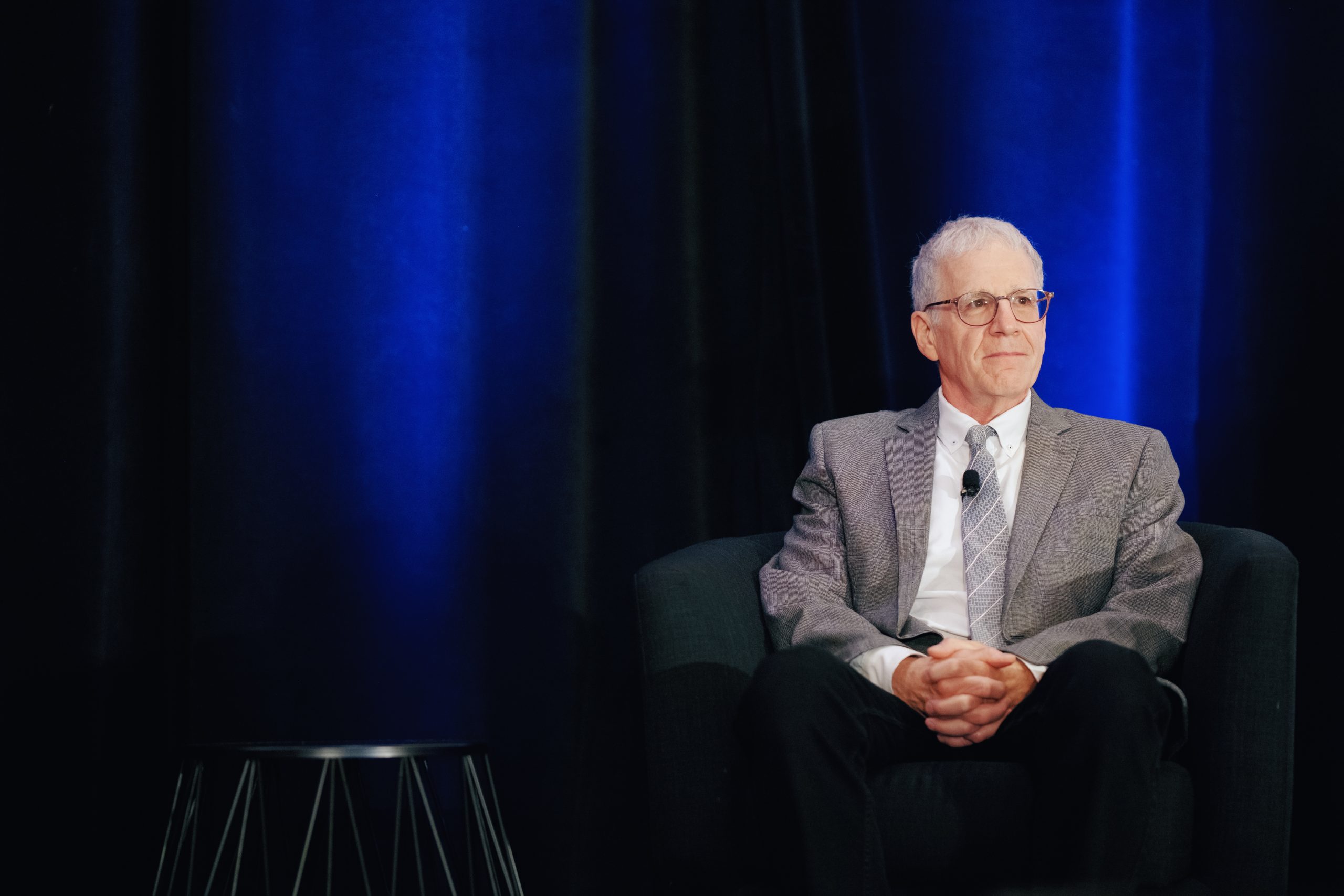
Sam’s accomplishments could fill pages. I stumbled upon him—one of the country’s leading experts in figuring out what’s real online—while trying to determine whether some content I found was legit. A quick Wikipedia check said “born and raised in Utica.” I felt that small-world thrill and pride that this world-renowned digital expert was one of our own.
After graduating from UFA, Sam spent his undergraduate years at Brown and UC Berkeley, and earned his Ph.D. in Psychological Studies in Education from Stanford. He worked as a research psychologist studying how people learn and make decisions at both the University of Washington and Stanford.
In 2022, he co-founded the nonprofit Digital Inquiry Group (DIG), which focuses on how people think, reason, and evaluate information online. Time, The Wall Street Journal, The New York Times, The Washington Post, NPR, ABC, NBC, and CBS have all featured Sam’s work—he’s become a major voice in the fight against misinformation and disinformation.
Sam was recently back in town visiting an old friend—the one who sat in front of him in Spanish class for four years—and he was happy to share the details of his visit. Predictably, he began with our food: “You can’t get Italian food like you can in Utica…” He hit Ventura’s and admired the waiters still wearing tuxes. He discovered Emerson Ave Coffee, calling it “a lovely little coffee shop,” and said, “If I were to move back to Utica, I could write there.” He stopped for a “nostalgic Utica Club” at Killabrew, where someone approached him and asked, “Are you Sammy Wineburg?” Other than the fact that he doesn’t go by “Sammy,” he was delighted and said, “It’s the type of thing that happens in a small town, not in Seattle.”
His family owned Ruth’s Department Store on Whitesboro Street—a “variety store.” Before that, it was the Wineburg Creamery. His ancestors were dairymen, the first to bring yogurt to Utica, according to his father. And yes, Sam is well aware of Chobani’s contributions to the area.
Sam was the editor of UFA’s school newspaper, The Corridors. It was judged best in the state in 1976, and Sam was awarded Journalist of the Year. He says the odds were stacked in his favor, thanks to his co-editor, Mark Danner, who later won the MacArthur “genius award.” Also in those years, Sam discovered a love for running on Utica streets when “running shoes were your Converse All-Stars.” He painted houses for the city and spent hours at Murnane Field watching his left-handed brother play first base for Utica College.
But one memory from home stays with him, and it helped shape who he is today. His UFA social studies teacher, Elaine Cantor, took the entire class to a hearing at the Public Utilities Commission where she testified against a rate increase. “The idea that an ordinary citizen could make their voice heard, in a very powerful, articulate way, made a lasting impression on me.”
As we pioneer through a quickly changing virtual frontier, Sam is at the forefront of how people make thoughtful decisions about what to believe. He wrote a book: Verified: How to Think Straight, Get Duped Less, and Make Wise Decisions about What to Believe Online, which Nobel Peace Prize laureate Maria Ressa praised as “the way to navigate spin, trolls and lies.”
Asking a couple of basic questions can save us from the regrettable rabbit hole. If we don’t know the source—whether it’s an influencer, a website, or a claim—ask: Who’s behind this? And what’s their reputation? Not doing that, Sam says, is like hiring a roofer who knocks on your door and says: “I’m in the neighborhood fixing roofs…I’m really honest, I’ll give you the best price.” You would never choose a roofer on that basis—you would check that person’s reputation.
Borrowing from what professional fact checkers do, Sam teaches a technique called lateral reading. Lateral reading means using the full context of the online ecosystem to assess credibility. It means searching to see what credible, known sources say about an organization, an influencer, a video, or an assertion. The internet is an interconnected source network—the way you know about any source is by understanding how it connects to others.
“The internet has created a state of confusion,” said Sam. Don’t be bamboozled by seemingly professional charts, impressive-sounding stats, advisory boards, scientific-sounding endorsements, supposed credentials—or assume a .org is trustworthy—anyone can get a .org domain, including hate groups. Dig deeper.
“We live in an attention economy—it’s about keeping our eyes glued to the screen. Before we give over our attention to any source, we need to pause for a minute. The most valuable thing we have in a digital society is our attention, and we shouldn’t waste it.”
Thanks for sharing, Sam.
