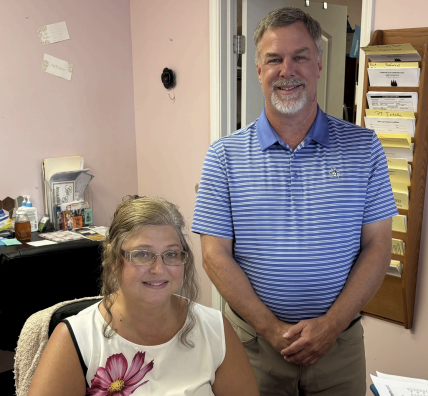



After struggling with a painful foot condition himself, New York Mills chiropractor James Kolwaite discovered a therapy he would eventually bring to his own patients.
“Imagine a technology that can actually help or even reverse a chronic condition. Such a thing has never existed until now.” – James Kolwaite
When James Kolwaite of Adirondack Chiropractic in New York Mills first told me about the new StemWave technology he is using in his office, it wasn’t the science behind it that caught my attention. It was the fact that James had first experienced the treatment as a patient himself.
A few years ago, James developed severe foot problems that made walking difficult forced him to stop
running and eventually made even But after trying the treatment himself and experiencing what he describes as significant improvement, he began looking more closely at the technology and the research behind it.
“I didn’t add StemWave therapy simply because it was the newest technology available,” James says. “A few years ago, I developed severe foot problems that made walking difficult and forced me to stop running. Even standing for extended periods became challenging. After trying StemWave therapy myself and experiencing significant improvement, I knew I had to bring the technology to my patients.”
So, what exactly is StemWave?
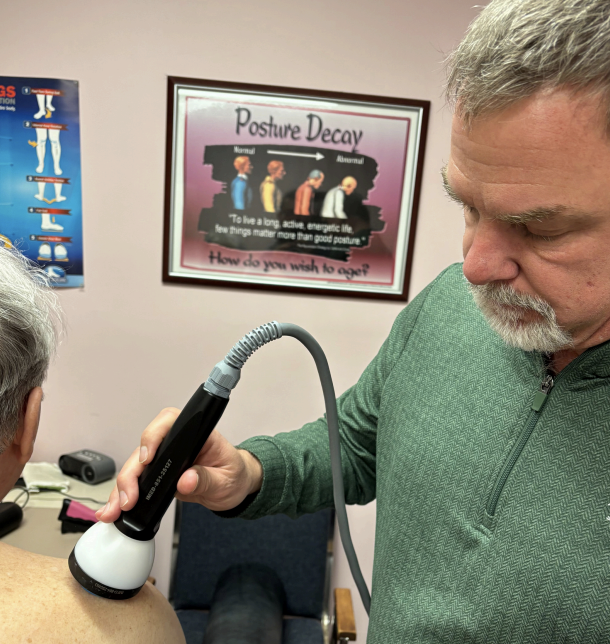
Despite its name, StemWave has nothing to do with stem-cell therapy or injections. It is a form of shock wave therapy that delivers acoustic pressure waves through a handheld device to mechanically stimulate tissue.
The science behind that process is called mechanotransduction, which is the way cells sense mechanical stimulation and translate it into biological responses. Research into shock wave therapy has explored its effects on pain, inflammation, circulation and processes involved in tissue repair and regeneration, while also noting that some of those mechanisms are still being studied.
What I found interesting is that the science is fairly complex, but the treatment itself is not. James uses a handheld applicator over the area being treated, and a typical session in his office takes about five to eight minutes. Some sensitive areas can be mildly uncomfortable, he says, but there is no surgery and no downtime. Patients can return to their normal routine afterward, although he generally recommends avoiding strenuous activity for the rest of the day.
Another option for stubborn pain
Many of the patients James sees have been dealing with the same problem for months or even years. Some have tried physical therapy, injections, chiropractic care or other conservative approaches. Others have simply adapted their lives around the pain, giving up activities they once enjoyed or beginning to wonder what options are left.
James says he has been particularly encouraged by what he has seen with foot, knee and shoulder complaints. There is also a growing body of research behind the broader field of extracorporeal shock wave therapy, particularly for certain musculoskeletal conditions.
One study involving 384 patients with plantar fasciitis and several types of tendinopathy reported significant improvements in pain, function and quality of life following shock wave treatment. A meta-analysis of randomized controlled trials involving tennis elbow also found greater pain reduction with extracorporeal shock wave therapy compared with therapeutic ultrasound, although the researchers noted limitations in the available studies.
For James, the research matters, but his belief in StemWave is also personal. He knows what it is like to deal with persistent pain, to wonder whether something will help and, perhaps most importantly, to be skeptical himself.
“It’s a game-changer,” he says. “I am passionate about educating prospective patients about StemWave because I lived it.”
That may be the part of his story that interested me most. James didn’t bring StemWave into his office simply because it was a new piece of technology. He came to it as a patient first, and his own experience is what led him to learn more and ultimately offer it to his patients.
After reading through the research and learning more about the technology myself, I found myself wondering the same thing many readers probably will: Could it help me, too? I decided I wanted to find out, so I made an appointment with James for my neck.