


The Mohawk Valley’s Revolutionary Story
There are places in America where Revolutionary history feels preserved behind glass.
And then there is the Mohawk Valley, where history still feels alive.
Long before America became a nation, this region was already shaping its future. The rivers, roadways, farmland, and frontier settlements stretching across Oneida, Herkimer, Montgomery, Fulton, Otsego, and Schoharie counties formed one of the most strategically important corridors in Revolutionary America. Armies marched through the Valley. Militias gathered here. Families found themselves divided by loyalty and survival. The Oneida Nation largely aligned with the Patriot cause here. And some of the Revolution’s most consequential moments unfolded right in the communities we still call home today.
As the country prepares to commemorate America250, marking the 250th anniversary of the signing of the Declaration of Independence in 2026, communities across the nation are reflecting on the people, places, and events that shaped America’s founding.
But in the Mohawk Valley, this history does not feel distant.
It is woven directly into the identity of the region itself.
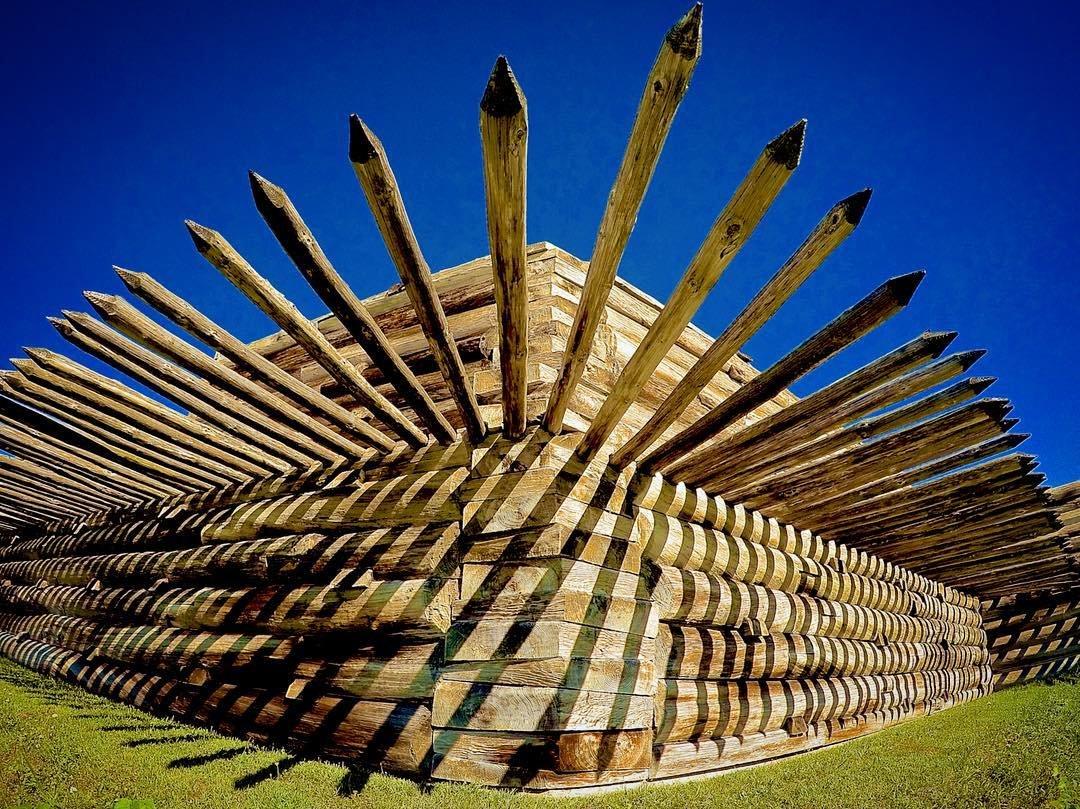
Fort Stanwix in Rome, then known as Fort Schuyler during the Revolutionary War and remembered today as “the fort that never surrendered,” became one of the Revolution’s defining strongholds during the pivotal 1777 siege. Nearby, the Battle of Oriskany became one of the bloodiest conflicts of the war and a major contributing factor in the Saratoga campaign that would ultimately shift momentum toward the Patriot cause. General Nicholas Herkimer led local militia forces through the Valley. Oneida allies provided critical intelligence and military support. Across the frontier, families faced violence, raids, displacement, and uncertainty as war unfolded directly outside their doors.
Nearly 250 years later, many of those same landscapes remain remarkably intact.
You can still stand inside Fort Stanwix. You can walk the grounds of Oriskany Battlefield. You can visit historic homes, forts, museums, and villages that continue preserving the stories of the people who lived through America’s fight for independence.
This year, communities across the region are bringing those stories back into focus.
xfThroughout 2026, and especially during the summer commemorations surrounding America250, the Mohawk Valley will host reenactments, lectures, living-history demonstrations, exhibits, parades, commemorative tours, and cultural programs that connect residents and visitors with the region’s Revolutionary roots.
But perhaps what makes America250 especially meaningful here is that this history still feels personal.
These are not stories disconnected from the region today. They are woven into the towns, families, landmarks, and communities that continue shaping the Mohawk Valley generations later.
Because while America’s story may have been written in places like Philadelphia and Boston, part of it was also written here.
And nearly 250 years later, those stories are still part of life here in the Mohawk Valley.
Where the Revolution Ran Through the Mohawk Valley
If there is one thread connecting the Mohawk Valley’s Revolutionary history, it is geography.
The Valley served as a natural passageway between the Hudson River corridor and the interior frontier, making it one of the most strategically important regions in colonial America. Whoever controlled the Mohawk Valley controlled one of the most important gateways in colonial America, from military movement to trade and communication across New York.
That importance made the region both essential and deeply vulnerable.
In Oneida County, Fort Stanwix stood at the critical Oneida Carrying Place, where travelers portaged between waterways linking the Atlantic coast to the Great Lakes. Rebuilt by the Continental Army in 1776, the fort became central to American defense efforts during British General Barry St. Leger’s 1777 campaign through the Mohawk Valley.
When British forces and their allies laid siege to the fort in August 1777, American troops successfully held their position, disrupting British plans to divide the colonies and isolate New England from the rest of the Patriot cause.
Many historians consider the failed siege at Fort Stanwix and the Battle of Oriskany to be major contributing factors leading to the eventual British surrender at Saratoga, widely recognized as one of the Revolution’s defining turning point.
Just miles from Fort Stanwix, the Battle of Oriskany unfolded on August 6, 1777.
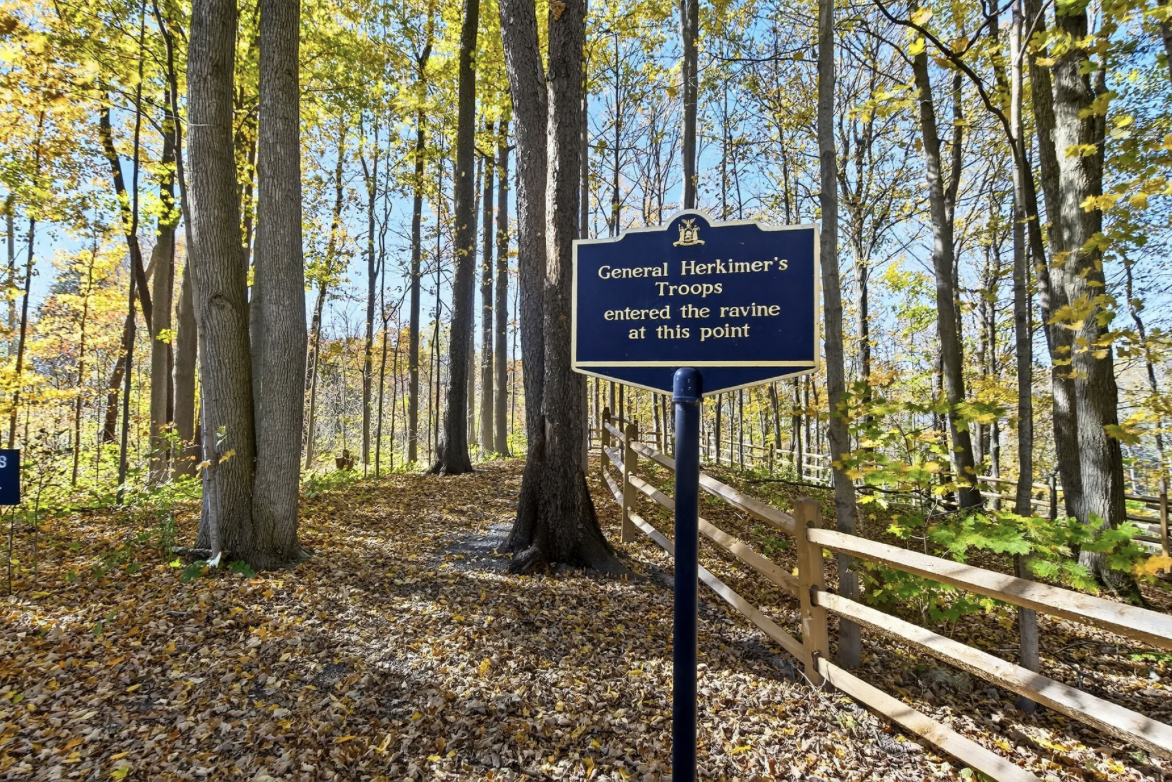
General Nicholas Herkimer led local Tryon County militia forces toward the fort in an effort to relieve the siege when they were ambushed in a ravine near present-day Oriskany. The battle quickly descended into brutal hand-to-hand combat fought in dense forest terrain during a violent summer thunderstorm.
It became one of the deadliest battles of the Revolutionary War.
Militia fighters, Loyalists, Indigenous warriors, and Patriot forces fought at extraordinarily close range. Herkimer himself was mortally wounded during the battle but reportedly continued directing his troops while seated against a tree.
The role of the Oneida Nation during this period remains one of the most important and complex stories connected to the region’s Revolutionary history. Unlike many Haudenosaunee nations that allied with the British, the Oneida Nation largely aligned with the Patriot cause, serving as scouts, warriors, guides, diplomats, and intelligence providers throughout the war. Their support proved critical to Patriot efforts across New York.
Throughout Herkimer and Montgomery counties, settlements, forts, and farms became targets during repeated frontier raids. Families often found themselves politically and culturally divided, with neighbors supporting opposing sides of the conflict. In the Mohawk Valley, the Revolution was not simply fought between armies. It was fought within communities themselves.
Further south and west, Fulton, Otsego, and Schoharie counties each contributed their own chapters to the Revolutionary story.
Johnson Hall in Johnstown remains one of New York State’s most significant colonial-era landmarks, reflecting the complicated political tensions that emerged before the Revolution. Schoharie County became known as the “Breadbasket of the Revolution” because of its agricultural importance in supplying Patriot forces. Otsego County’s historic villages and settlements reflect the expansion and transformation that followed American independence.
Together, these counties form one of the richest Revolutionary landscapes anywhere in the country.
And today, many of those stories can still be experienced exactly where they happened.
Experience America250 Across the Mohawk Valley
This summer and throughout the America250 commemoration, events across the Mohawk Valley will bring Revolutionary history to life through lectures, reenactments, exhibits, historic-site programs, community celebrations, and family-friendly events.
Across the region, historic sites, museums, libraries, and local organizations are honoring the nation’s 250th anniversary with programming designed to reconnect residents and visitors with the Mohawk Valley’s Revolutionary roots.
America250 also offers a chance to experience the Mohawk Valley in a way many people never have before, not just through its history, but through the communities that continue preserving it today.
Spend the afternoon exploring Fort Stanwix before dinner in Downtown Rome. Visit Oriskany Battlefield, then continue through the surrounding small towns, local shops, breweries, restaurants, and historic villages that now define the region. Tour Johnson Hall in Fulton County. Drive through Schoharie Valley farmland that once supplied troops during the Revolution. Explore museums, waterways, trails, and preserved sites that continue carrying these stories forward nearly 250 years later.
Because while America250 reflects on the nation’s founding, it also highlights something equally important:
The people and communities throughout the Mohawk Valley who continue carrying these stories forward today.
AMERICA250 EVENTS ACROSS THE MOHAWK VALLEY
Herkimer County Fire in the Sky Palooza
July 1 | Herkimer County | 5–10 p.m.
Summer celebrations begin in Herkimer County with fireworks, entertainment, and community festivities tied to the growing excitement surrounding America250 across the Mohawk Valley.
Oneonta & Otsego County America250 Celebrations
July 3–5 | Oneonta & Otsego County
Communities throughout Otsego County will mark America250 weekend with patriotic festivities, hometown celebrations, historical programming, and community events throughout the region.
Independence Day the 18th Century Way!
July 4 | Fort Stanwix National Monument, Rome
One of the Mohawk Valley’s signature America250 events returns with Revolutionary War reenactors, cannon and musket demonstrations, Declaration of Independence readings, colonial games, living-history programming, and hands-on activities throughout the day. Festivities begin at 9:30 a.m.
America250 Celebration
July 4 | Vernon Center | Noon–9 p.m.
A full day of patriotic festivities honoring America’s 250th anniversary with entertainment, family activities, food, and community celebrations.
Springfield 4th of July Parade & Celebration: America250
July 4 | Springfield, Otsego County
This patriotic community celebration includes an America250-themed parade followed by music, festivities, and family programming throughout the day.
Oneida’s Celebration 250 USA
July 4 | Oneida American Legion, Oneida | Begins at 11 a.m.
Hosted by the Oneida American Legion and co-sponsored by the City of Oneida, this patriotic celebration features live music, food trucks, vendors, a parade, car show, family activities, and fireworks at dusk.
Independence Day Weekend at Herkimer Home
July 4–5 | Herkimer Home State Historic Site, Little Falls
Celebrate Independence Day weekend with Revolutionary-era reenactors, historical demonstrations, educational programming, and family-friendly activities at the historic home of General Nicholas Herkimer.
Polly Cooper: Oneida Heroine
July 8 | Utica Public Library | 5:30–6:30 p.m.
This special presentation explores the story of Polly Cooper, the Oneida woman remembered for aiding Continental soldiers during the Revolutionary War and strengthening the alliance between the Oneida Nation and Patriot forces.
Oriskany: The Lost Battlefield
July 12 | Oriskany Museum | 2 p.m.
Historian Joseph Robertaccio explores how aerial archaeology, battlefield photography, eyewitness accounts, and modern research continue uncovering new details surrounding the Battle of Oriskany.
General Herkimer’s 40-Mile March Marker Rededication Bus Trip
July 18 | Oneida & Herkimer Counties
This commemorative event retraces the historic route traveled by General Nicholas Herkimer and local militia forces on their march toward Fort Stanwix before the Battle of Oriskany.
Honor America Days
July 25 | Rome
Rome’s longtime patriotic tradition returns with a full day of community celebrations honoring America250, including the Honor America Days Parade, entertainment, family activities, evening symphony performance, and fireworks.
Talkin’ Bout A Revolution: A Haudenosaunee Response to the 250th
Ongoing Through December 2028 | Iroquois Museum, Howes Cave
This exhibit explores the Haudenosaunee perspective on America250 and examines the Revolutionary War’s lasting impact on Indigenous nations throughout the Northeast.
Explore Revolutionary History Year-Round
Fort Stanwix National Monument | Rome
Known as “the fort that never surrendered,” Fort Stanwix remains one of the country’s most important Revolutionary War landmarks.
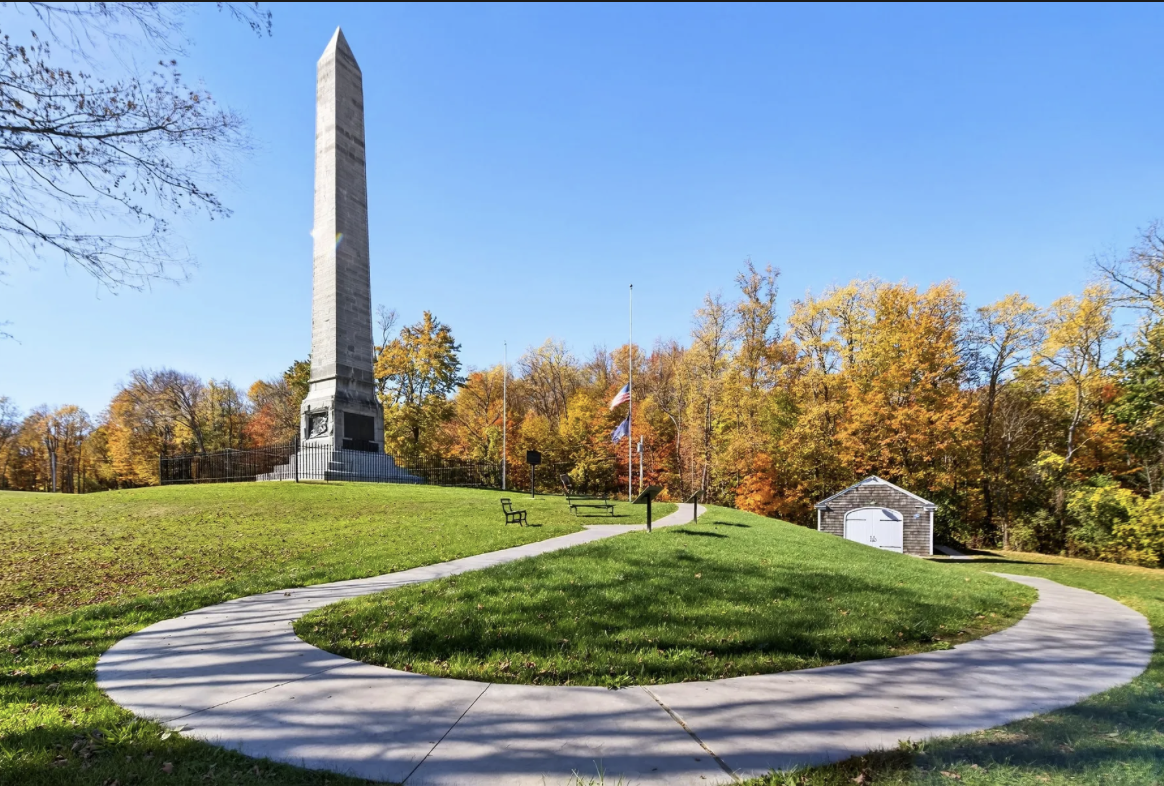
Oriskany Battlefield State Historic Site | Oriskany
The monument commemorates the Battle of Oriskany and the Patriot militia and Oneida warriors who fought there in 1777.
Steuben Memorial State Historic Site | Remsen
Visit the former estate of Baron von Steuben, credited with helping transform Washington’s Continental Army into a disciplined fighting force.
Johnson Hall State Historic Site | Johnstown
One of New York State’s most important colonial-era sites, offering insight into the political divisions and frontier tensions that shaped Revolutionary-era New York.
Oneida County History Center | Utica
From Revolutionary War history to immigration, innovation, and industry, the History Center continues preserving the stories that shaped the Mohawk Valley and the nation itself.
Event details and dates were verified through publicly available sources as of May 2026. Readers are encouraged to confirm schedules and event information directly with organizers prior to attending.
More Than a Celebration of History
The Mohawk Valley has always been a region shaped by resilience.
That was true during the Revolutionary War, when communities throughout the Valley faced uncertainty, violence, political division, and hardship along the frontier. And in many ways, that spirit of perseverance still defines the region today.
Across the Mohawk Valley, history has always been deeply tied to community. Many of the same towns, landmarks, and traditions that shaped the region generations ago still remain part of everyday life today. That connection to place, and to the stories behind it, is part of what makes America250 feel especially meaningful here.
Across the region, history is not confined to museums or monuments alone. It lives in family traditions, historic downtowns, community events, preserved landmarks, and the people who continue investing in the places they call home.
As America prepares to celebrate 250 years, the Mohawk Valley brings something deeply authentic to that story.
This is not history recreated for visitors.
It is history that still shapes the region today.
You can see it in the stone walls of old forts, the farmland stretching through the Valley, the names of local roads and villages, and the communities that continue honoring their past while building their future.
America250 also creates space for broader conversations surrounding the Revolution itself, including the experiences of Indigenous nations, Loyalists, settlers, frontier families, and the communities whose lives were permanently shaped by the conflict. Across the Mohawk Valley, museums, cultural institutions, and historians are helping tell those stories with greater depth, balance, and perspective than ever before.
And while America250 reflects on the country’s founding, it also reminds us how much the Mohawk Valley’s story is still evolving today.
Across the region, communities continue investing in their downtowns, preserving historic landmarks, supporting local businesses, celebrating cultural traditions, and creating new opportunities for future generations.
This summer, America250 invites residents and visitors alike to rediscover the Mohawk Valley not simply as a place connected to American history, but as a place that helped shape it.
And nearly 250 years later, that story continues here every day.
