




By Lisa Briggs
March is not about starting over. It is about resetting what already exists.
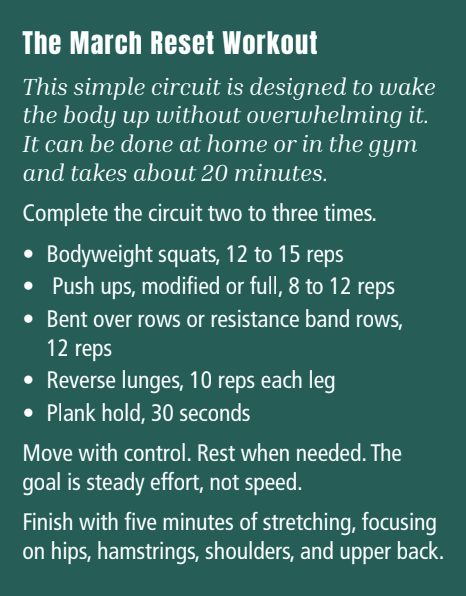
After the push of January and the flexibility-focused approach many people take in February, March becomes the bridge. The days stretch a little longer. Energy begins to return. This is the time to recalibrate, not overhaul.
A reset is quieter than a restart. It does not demand extreme effort or perfection. It asks for awareness. What is working. What feels heavy. What needs adjusting.
Winter routines tend to linger longer than we expect. Movement slows. Motivation dips. Workouts become inconsistent or stop altogether. The solution is not to push harder. It is to reset expectations and reconnect with movement in a way that feels manageable and sustainable.
What a Reset Really Looks Like
A reset starts with removing pressure. You do not need a brand new program. You do not need longer workouts. You do not need to punish yourself for what winter looked like.
Instead, focus on returning to the basics. Show up consistently, even if sessions are shorter. Choose movements that feel good in your body. Rebuild strength, mobility, and confidence before intensity.
As a coach, I see this every year. March is when people want to feel strong again but are unsure where to start. That is where structure matters.
At Fit Body Boot Camp, our workouts are designed to meet you where you are. You do not need to be in peak shape to show up. The coaching, programming, and accountability remove the pressure of figuring it out on your own and allow you to focus on building strength and consistency safely.
Supporting Your Reset
For many people, a reset also includes recovery and mobility. Strength training builds confidence and momentum, but pairing it with restorative movement can support long-term progress.
Adding something like a Saturday yoga class can improve flexibility, balance, and mental clarity while helping the body recover between strength sessions. Yoga works best as a complement, not a replacement, especially during seasonal transitions when stress levels are higher and routines are shifting.
Reset the Mindset
The most important part of a reset is mental. Consistency does not have to be intense to be effective. Small, intentional choices build momentum. Momentum builds confidence. Confidence fuels progress.
If your workouts feel shorter than you want, that is okay. If you miss a day, that is okay too. A reset teaches you how to return without guilt.
Looking Ahead
Think of March as preparation. This is the month that sets the tone for spring movement, outdoor workouts, and stronger routines ahead.
You are not behind. You are simply resetting. And sometimes, that is exactly what your body needs.
