



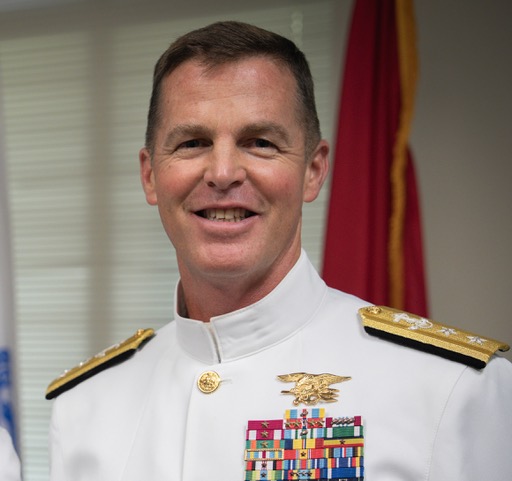
Mark A. Schafer is a United States Navy Rear Admiral and career special operations officer, currently serving as the Commanding General, Special Operations Joint Task Force‑South under U.S. Southern Command. Beyond the impressive titles and contributions to our safety, he is a person grounded in family, community, team, and humility. You may manage to read through Mark’s interview without a lump in your throat—I couldn’t—but I promise you’ll find words of wisdom and a feeling of pride that this human being calls the Mohawk Valley home.
How long did you live in the Mohawk Valley?
It wasn’t until college that I lived anywhere else. The Mohawk Valley is where I was born and raised and will always be home.
What are things that you loved about growing up here?
I never thought life in the Mohawk Valley could get any better—I had such a blast with my friends! We loved every season: heading to the lakes for boating and waterskiing, and driving up to Old Forge for winter skiing. With wide-open spaces and no traffic, I could hop on my bike, meet up with friends, and explore in a safe place. I’ve lived in big cities and rural spots across the country and the world, but I always look back and cherish how connected I felt in the Mohawk Valley. Whether it was deep friendships with neighbors or visiting local shops where I knew the families, those bonds were special.
Looking back, was there something from your youth that pointed you toward your path?
My family, especially my grandfather, inspired me to consider the Naval Academy. He graduated in 1935 and served 37 years, including three wars. My dad also served for five years. What pushed me to apply to the Naval Academy was meeting an Annapolis senior* during my freshman year of high school. I found him so grounded and inspiring—someone I hoped to become. He didn’t paint a perfect picture; he just spoke kindly about life at the Academy and his hopes for the Navy.
*That Annapolis senior was current Mohawk Valley resident Paul Rayhill.
What first drew you to the SEALs?
I went straight from high school to Annapolis and figured I’d be a fighter pilot, along with everyone else who saw themselves in the original Top Gun. I learned about the SEALs during my plebe year and was immediately drawn in. I began reading about SEALs in Vietnam and made that my main objective—competing for one of the few openings at graduation. Aiming for the SEALs kept me focused on grades and military performance, helping me secure one of 16 billets in a graduating class of roughly 950 students. What attracted me to the SEALs was my interest in diving, along with the prospect of joining a tight, elite team. Diving, parachuting, and patrolling around the world felt like the ultimate Navy adventure.
Was there a coach, teacher, mentor who motivated you?
One SCUBA screening included a swim test, and because I wasn’t the strongest swimmer, I knew I had to improve. I contacted my high school track coach, Tom Wells, who also taught swimming, and he used part of Thanksgiving break to refine my strokes. I passed without trouble, which started my path toward becoming a SEAL. Coach Wells was a major influence, and I remain grateful for his help in teaching an old runner to swim better.
What was the key to getting through SEAL training?
What sustained me was my family’s backing and guidance from my father and the people he introduced me to. My dad often said, “Finish what you start,” so quitting wasn’t an option. Jim LaFountain of the All American Fitness Center was another extraordinary coach and mentor. He tested my resilience with demanding—sometimes crazy—workouts. I loved it! I was an above-average athlete at best, but those coaches helped me develop the mental toughness required for SEAL training. During BUD/S (Basic Underwater Demolition/SEAL), quitting never entered my thoughts. I was “all in” and that outlook made a difference. I advise prospective SEALs to consider their purpose and commit fully before beginning. If curiosity alone drives you, the path will be hard and doubt may weaken your confidence.
How many SEAL missions have you led?
Since September 11, 2001, I’ve had many chances to lead, but I haven’t kept a tally. The mission that stays with me most was rescuing an American held by hostile forces. Seeing his gratitude made me incredibly proud of the team, and it meant a lot that the military honored our sailors with valorous awards—they earned it! Sometimes I led; other times I supported, and I’m humbled to work with such amazing professionals. SEALs, SWCCs, and everyone in special operations—intelligence, aviators, comms, logistics—all come together to deliver success, especially when bringing an American home.
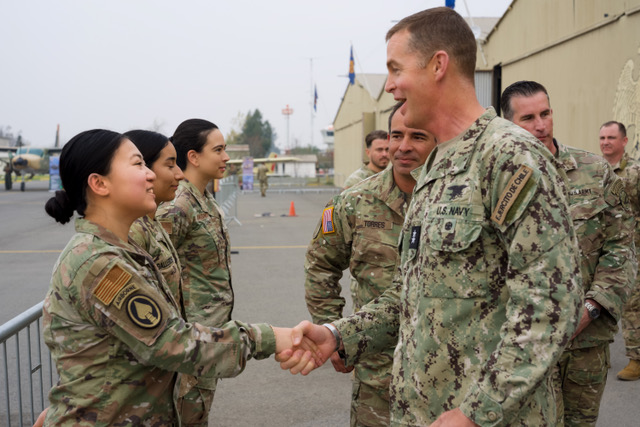
When you’re deployed, does a piece of home stick with you?
Yes—where I’m from. One of my favorite moments was in the Middle East, visiting an embassy. As we wrapped up our meetings, a senior defense official and I realized we’d competed against each other in track. It was great to see a familiar face halfway around the world and swap stories about racing each other in Central New York.
You’ve led teams in intense situations—how do you stay calm?
Many of us in the military believe that when things get hard, we don’t rise to the challenge, we fall back on our training. That’s why we spend so much time preparing for the hardest scenarios, so nothing catches us off guard. From the very start, BUD/S is designed to be tougher than anything we’d face in combat. That preparation has served me well, and I’ve rarely had to improvise.
How do you make decisions when the information is incomplete and the stakes are enormous?
I lean on my preparation, my teammates, and the lessons we’ve drilled together—it shapes everything I do. When you become a senior leader, the easy choices are already handled, so you’re usually left with the tough ones. That’s simply part of leadership: bringing clarity to situations that feel messy. A great foundation for those choices is asking, “Are we doing the right thing?” During my first command, I worked with a savvy master chief. Whenever things got complicated, he’d say, “Let’s just do the right thing.” We agreed that difficult decisions should be explainable, so we relied on three checks: Is it right? Can I look at myself in the mirror? And could I explain it to our leaders and feel good about it?
What’s one leadership lesson you wish everyone knew?
A mistake doesn’t define you—what matters most is how you bounce back. It’s about learning, tweaking your path, and returning stronger. We welcome people who are brave enough to try, even if they trip up. The secret is getting up fast, brushing yourself off, and diving back in. That’s what Special Operations has shown us again and again—having the guts to try and the grit to keep going.
For those less familiar with the military, can you explain what you do now?
My SEAL career has grown. I started at the hands-on level in a platoon with fellow SEALs. Over the years, I took on more responsibility and spent less time doing the basics—like shooting, moving, communicating, diving, and parachuting. Now, at higher command levels, I joke that my “weapons” used to be rifles and pistols, and my “infiltration” was diving gear; today, I drive or fly to meetings, and my tools are phone calls, emails, and memos. Even so, it’s rewarding and challenging, and I feel lucky to keep serving in the Navy.
My last assignment was leading Special Operations Command South (SOCSOUTH), the special operations component for the U.S. Southern Command. We worked across Central America, the Caribbean, and South America, building partnerships and sharing training with special operations forces throughout the region.
Now, I’m the Deputy Commander at Joint Special Operations Command (JSOC), helping ensure our teams are resourced, equipped, and effectively employed around the world.
When you think back to growing up here, what values stayed with you?
First is the value of hard work, whether handling a major task or a supporting role. Giving your best through honest effort is a great way to approach anything in life. I learned all that growing up in Central New York.
Second is to give people a chance. I remember my fifth-grade teacher, Mrs. Yozzo, who gave me opportunities I might not have fully earned, but she saw potential in me. She challenged me and got me into programs that put me on a better path. When you can, give someone a chance to grow.
What do you hope your legacy will be?
I hope my legacy reflects that I loved my family and cared for them well. I’m proud to have served in the Navy, but even more proud to have supported my sailors so they could do their best to protect our national security. My biggest goal is to share what I’ve learned over 30 years and pass the best of it to the next generation of leaders. I want to help our teammates navigate whatever stormy seas lie ahead.
