


A Community Built on Possibility
Edmeston, New York
There are places that serve a purpose. And then there are places that feel like a calling.
Pathfinder Village is both.
Set gently into the hills of Edmeston, just outside Cooperstown, Pathfinder Village is not simply a campus. It is a living, breathing community that has been evolving for more than a century with a singular, unwavering mission to create meaningful lives for people with Down syndrome and other intellectual and developmental disabilities.
When I arrived for my tour, I was greeted by President and Chief Executive Officer Karen Knavel, whose leadership reflects deep respect for the organization’s history and a clear vision for its future. Joining her were Kelly Meyers, Director of Admissions & Enrollment Management; Layla Hazlett, Director and Clinical Coordinator of Adult Services; Christine Rautenstrauch, Director of The Farmstead; and Amanda Powell, participant of supported employment services and summer camper.
Their perspectives, from administrative to clinical to lived experience, revealed something rare. This is a community designed with intention at every level of life.

A Vision Rooted in Courage
The story begins as the Otsego School, founded in 1922 by two nurses who recognized a profound need. At a time when infants born with Down syndrome were often institutionalized or left without structured care or educational opportunity, these women believed something different was possible. Families needed support. Children deserved education. Community mattered.
For decades, the school operated in a farmhouse setting in Edmeston. It was modest, deeply personal, and rooted in care.
When state regulations evolved and residential schools were required to meet more formal standards, many small programs struggled. For the Otsego School, it became a turning point. Founder Marian Mullet stepped forward with a vision that would reshape everything. She envisioned “a very free environment where people can come and go at will, where neighborliness and friendship count, where you don’t have to ask permission to do things.”

It was not a model built around restriction. It was built around dignity.
Marian secured land, expanded programming, and transformed what had been a small school into what would become Pathfinder Village, a true village. Early expansion even began quite literally in a neighbor’s backyard while property negotiations continued, a testament to her determination and belief that the mission could not wait.
What started as a farmhouse school grew intentionally, steadily, and always in response to need.
Education With Individual Intention
At the heart of the campus is the Pathfinder School, led by Nancy Osborn, MSEd, Director of Education.
The school serves students ages 5 to 21 with individualized education programs tailored to each learner.
Classrooms range from elementary to middle and high school, with transition planning woven directly into the academic day. Every student has an IEP. Class sizes are intentionally small. Support is individualized, but expectations are high.
What stood out most was the integration of real-world skill development into everyday routines. Students run a snack cart business. They organize mail delivery between buildings. They manage coffee orders in partnership with a local café. They learn budgeting by purchasing items at local stores. They prepare envelopes, handle payments, and deliver goods throughout campus.
These are not simulations. They are meaningful roles embedded into real days.
The gymnasium supports adaptive physical education and therapy services. Occupational and physical therapy are integrated as needed. Recreational opportunities include Zumba, yoga, basketball, hockey, treadmill training, and cycling. A new playground reflects continued investment in both access and opportunity.
Learning here extends far beyond classroom walls. It is about confidence. Responsibility. Belonging.
The Otsego Academy
Pathfinder expanded to include a post-secondary residential program for young adults seeking a college-style experience. The Otsego Academy provides a two-year immersive opportunity for students who want independence with support.
Each Academy student has their own room. Families help decorate. Move-in day is intentionally handled by families to support transition and ownership. The result is deeply personal. Rooms reflect identity, pride, and autonomy.
Students participate in coursework, job training, enrichment, and community engagement. Some return home after completing the program. Others choose to stay and become part of the permanent residential community.
Individualization remains the hallmark.
Residential Living Across the Lifespan
Pathfinder’s homes offer varying levels of support. Some are single-sex residences. Others are mixed. Placement decisions are thoughtful and collaborative, ensuring compatibility and fit.
Residents cook together. They follow weekly menus. They rotate chores such as dishes, table setting, and garbage duty. Thursday dinners may be communal cooking nights. Life here mirrors the rhythm of any shared home, complete with laughter, responsibility, and the occasional debate over whose turn it is to take out the trash.
There is also a specialized residence designed for aging adults. Individuals with Down syndrome are living significantly longer than they once did. Pathfinder has responded proactively, collaborating with subject matter experts and occupational therapy leaders to implement best practices in aging support.
Layla Hazlett’s work in adult services reflects a forward-thinking model that integrates therapeutic approaches with enabling technology. Voice-assisted devices, virtual reality job training, and video prompting systems are being implemented to support greater independence.
One story stayed with me. JT, a participant of supported employment services, was working at NYCM Insurance and struggled only with changing the battery in a vacuum. Using video prompting integrated into his communication device, he now performs the task independently. His mother later described the transformation as life-changing.
This is innovation grounded in dignity.
Pathfinder Produce
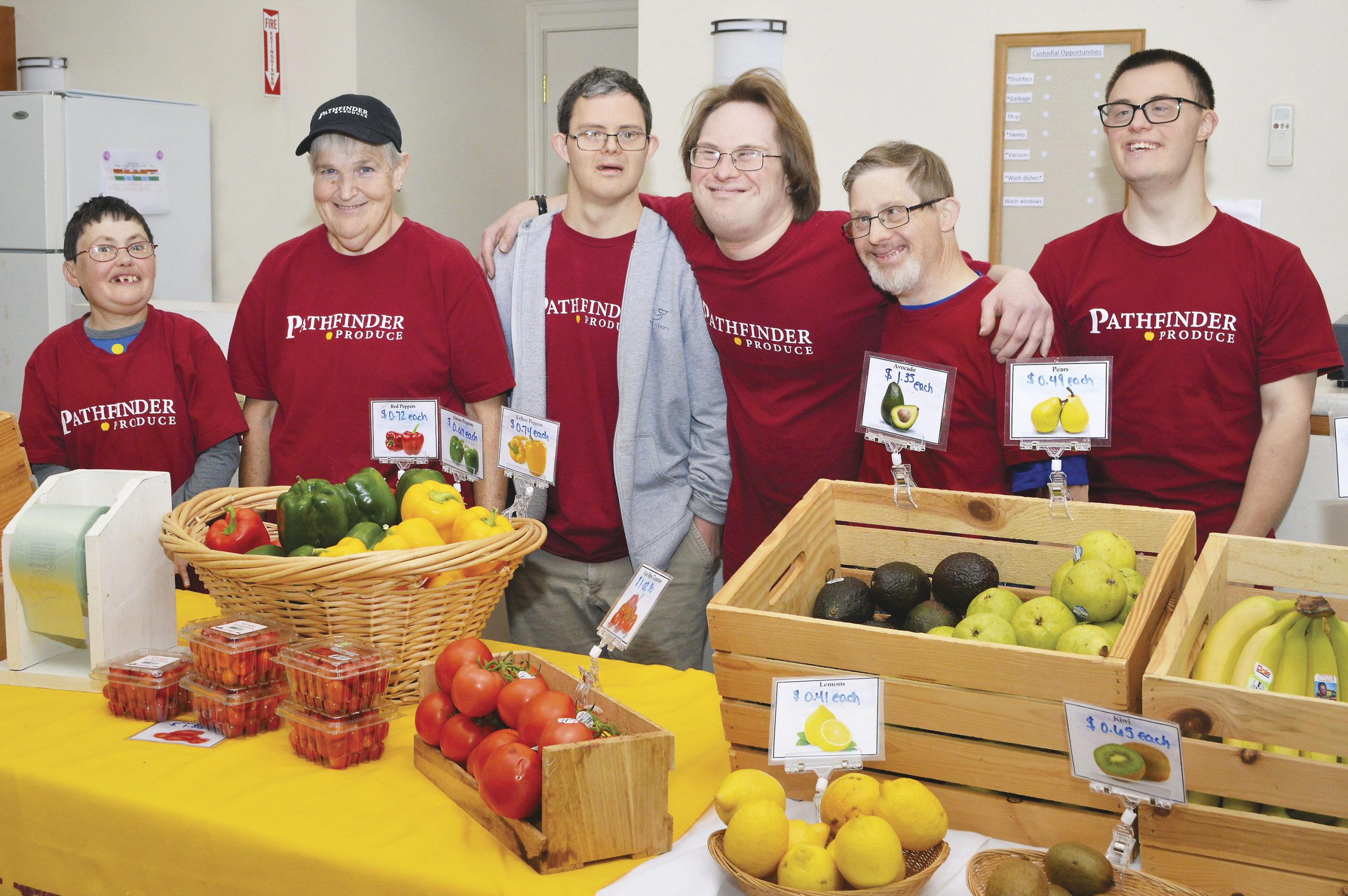
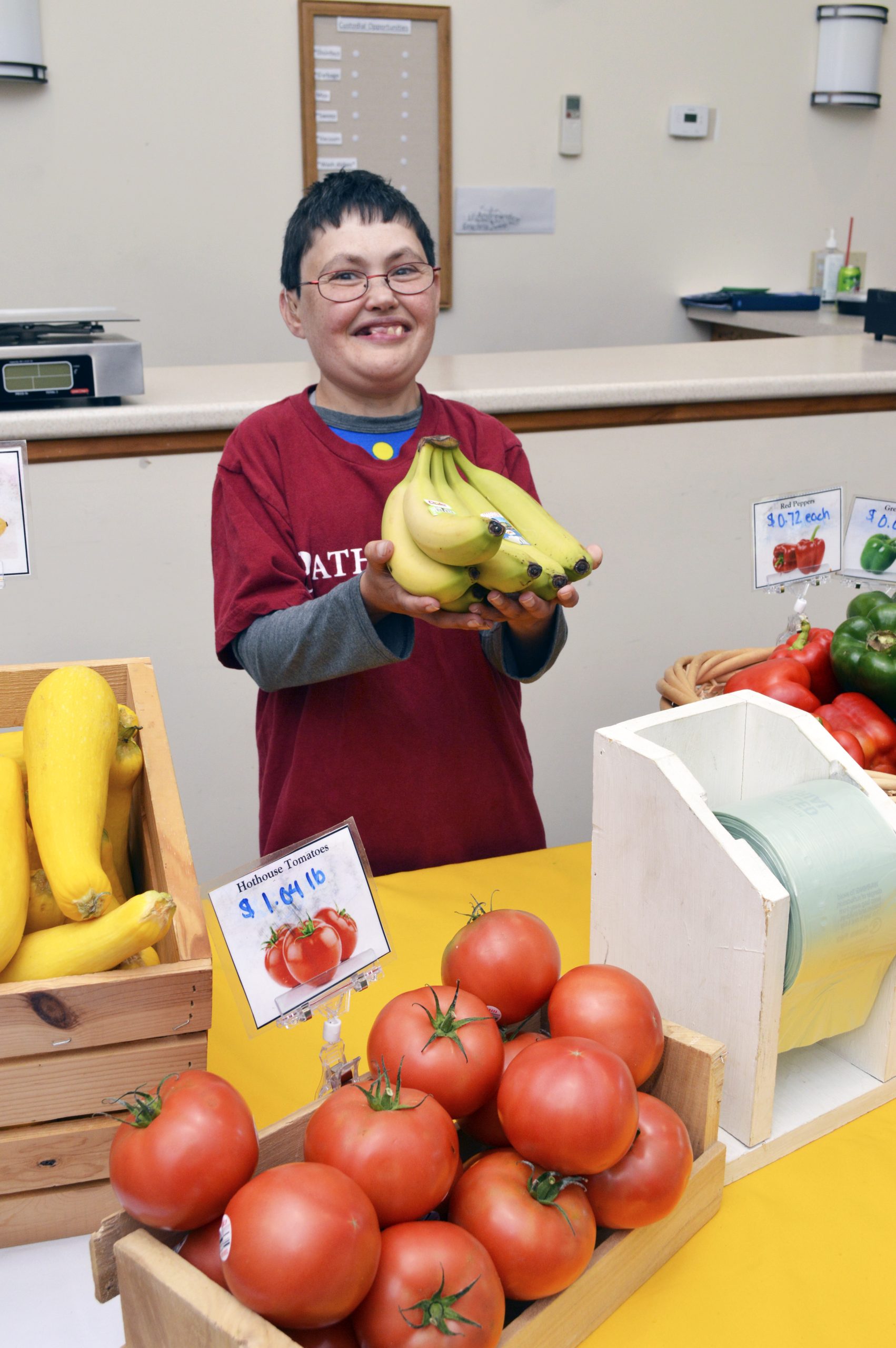
The market known as Pathfinder Produce represents one of the most visible intersections of training and community.
Produce, grocery items and meat selections that reflect regional partnerships. But Pathfinder Produce is about far more than what fills the shelves.
When we walked in, Todd was at the counter making a pizza. He moved carefully and deliberately, talking through each step as he layered sauce and cheese. He shared how much he loves cooking, how he enjoys choosing ingredients, following recipes, and watching something come together in the oven.
When he stepped back to admire his work, his smile lit up the entire room. And when we asked him about the best part of cooking, he did not hesitate. The tasting. That answer came with a grin and a little celebratory dance that made everyone laugh.
That moment captured exactly what Pathfinder Produce represents.
Participants are not simply stocking inventory. They are selecting recipes, preparing food, greeting customers, managing transactions, and working as a team. They are building sequencing skills, problem solving in real time, learning food safety, practicing customer service, and gaining confidence with every interaction. It may take a little longer to prepare a sandwich or assemble a pizza, and that is part of the process.
The experience is the curriculum.
A Campus That Welcomes the Community
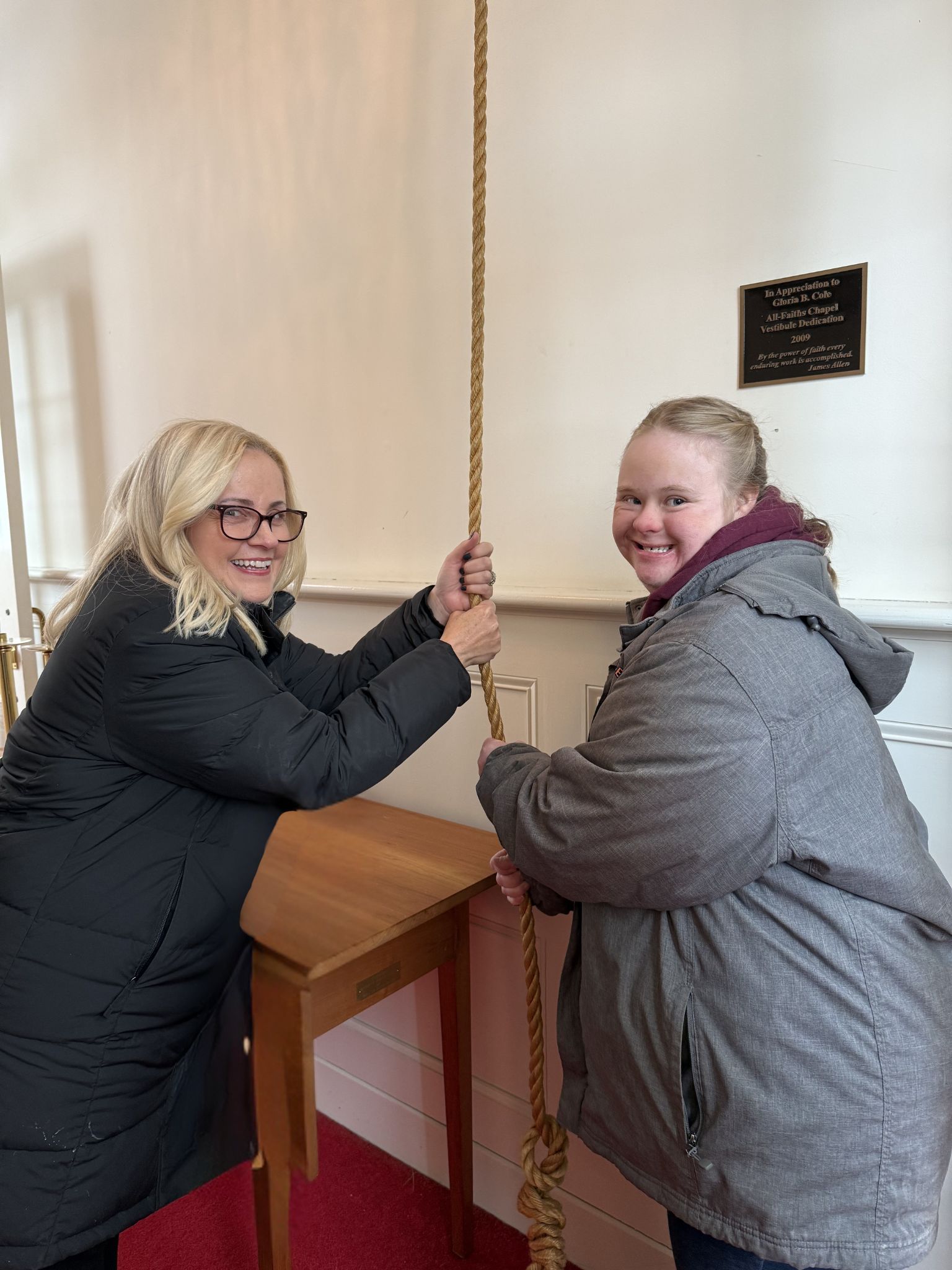 The historic chapel, relocated and reconstructed stone by stone, sits as both symbol and gathering space. Sunday services are optional. During the week, the chapel transforms into a music venue with karaoke, hand bell choir rehearsal, drum circles, and piano lessons.
As a guest, I was invited to ring the chapel bell. Amanda stood beside me, proudly offering instructions and encouragement. Together we pulled the rope, and the bell echoed across the village. It was one of those simple moments that felt unexpectedly meaningful. Amanda’s smile said everything. This was her community, and she was welcoming me into it.
Beyond the chapel, the campus continues to open itself outward. The art room hosts tie-dye sessions, seasonal projects, and summer camp workshops. Every October, the building becomes a haunted house, welcoming the public for trick-or-treating in a safe and accessible setting that makes it easy for families with little ones to participate.
The pavilion hosts summer concerts open to the public, drawing neighbors from across the region for evenings of music in the hills of Edmeston. Families rent the space for reunions, celebrations, and community gatherings.
Outdoor spaces are equally intentional. The updated playground serves students during the school day and offers a vibrant, inclusive space for movement and recreation. Walking trails wind through the property, inviting residents and visitors alike to slow down and enjoy the landscape. An upcoming pickleball court will add yet another opportunity for recreation and connection, reinforcing the Village’s commitment to wellness across generations.
Every space here feels designed not just for residents, but with community in mind.
Pathfinder is not isolated. It is interwoven with its neighbors.
The Future: The Farmstead
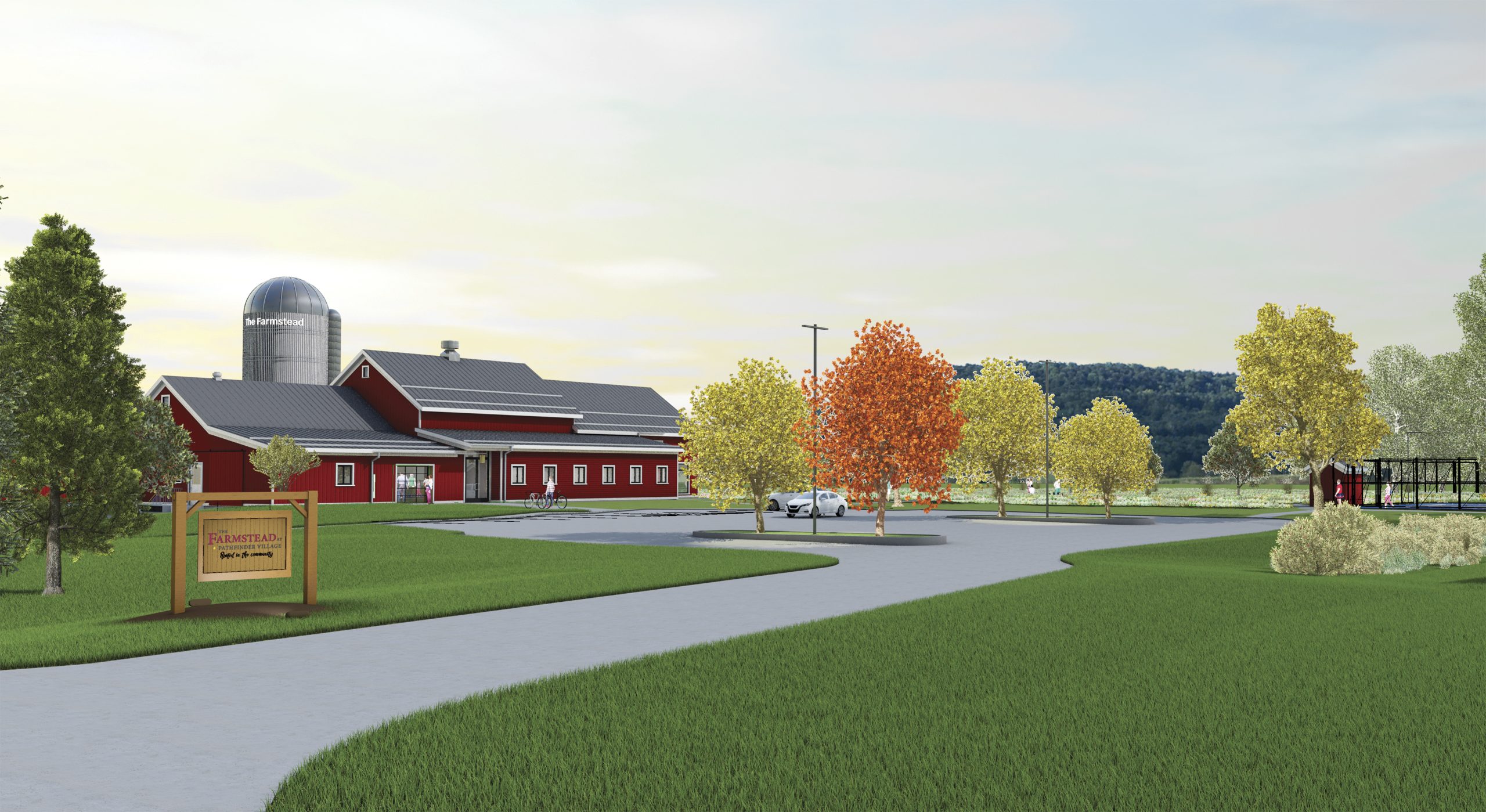

If Pathfinder Produce reflects where the Village is today, The Farmstead represents what comes next.
Pathfinder Village broke ground on The Farmstead Market and Community Center in June 2025, launching a 5,700 square foot retail and training hub designed to expand employment, education, and community access. The $5.5 million project, designed by Altonview Architects and constructed by Pike Construction Services, is being built with sustainability and purpose at its core, including geothermal wells and plans for LEED Silver certification.
The Farmstead is a direct response to regional need. Edmeston is classified as a USDA designated food desert, with the closest full-scale supermarket approximately 30 minutes away. The year-round retail market will improve access to fresh produce, grocery staples, and prepared grab-and-go meals while supporting vocational training and paid employment for adults with intellectual and developmental disabilities.
Inside, the space will include a Culinary Training Kitchen, a fully integrated Retail Market, two classrooms for workforce development instruction, and a multifunctional program area for Adult Day Services and community events.
As we toured the site, still very much under construction, Amanda paused and looked around at the framing and open space. “I can’t believe this is ours,” she said.
The moment was simple and spontaneous, yet it captured the heart of the project. The Farmstead is not just a capital expansion. It is a reflection of Pathfinder’s inclusivity, its person-centered philosophy, and its unwavering belief that opportunity should belong to everyone.
A Village By Design
Walking the campus, you feel insulated from the noise of the outside world. It is quiet without being silent. Purposeful without being rigid. Structured without being institutional. What began as the Otsego School has grown into something far larger than a program. It is a neighborhood. A workplace. A school. A chapel. A café. A summer camp. A home.
At its core remains Marian Mullet’s belief in freedom, neighborliness, and the simple dignity of living without unnecessary barriers. Pathfinder Village is not simply a place where people are supported. It is a place where people belong.
_______________________________
Support the Mission
Pathfinder Village has always grown with intention. Every program, every home, every expansion has been built around one guiding belief: opportunity should belong to everyone.
As The Farmstead rises and vocational programs continue to expand, community support plays a critical role in what comes next.
Donations directly support:
- Start-up resources and equipment for The Farmstead Market and Culinary Training Kitchen
• Pre-vocational training programs that prepare individuals for meaningful work
• Vocational and employment services that foster independence and long-term success
• Technology and adaptive tools that enhance job readiness and workplace confidence
These initiatives are not extras. They are pathways to dignity, purpose, and belonging.
If you believe in building inclusive communities where individuals of all abilities can live, learn, and work with confidence, this is a place where your support makes a measurable difference.
Scan the QR code to make a gift and help power the next chapter of possibility at Pathfinder Village.
